If you’ve spent any time roaming The Lands Between back in 2022, you probably remember the exact moment you realized something was… different. I remember stumbling out of Stormveil Castle for the first time, pockets jangling with more Smithing Stones than I knew what to do with. It felt almost wrong, you know? The DNA of FromSoftware games has always screamed scarcity — upgrading a weapon used to be a sacred, stressful ritual. You’d hoard those Titanite shards like a dragon guarding its treasure. But in Elden Ring, I was tripping over upgrade materials. Every cave, every tunnel, every half-hidden treasure chest seemed to spit out another gleaming stone. And honestly? As a gamer who loves tinkering, I couldn’t be happier.
It took me a while to unpack why the devs made this choice, but once I started thinking about the game’s design, everything clicked. This wasn’t a mistake or a balancing oversight. The abundance of Smithing Stones and Somber Smithing Stones is woven into the very fabric of what makes Elden Ring work so brilliantly. Let me walk you through it.

The sheer scale demands a bigger toolbox
The first and most obvious reason is just how much stuff is in this game. I’m not talking about the map size — though that’s part of it — I’m talking about the arsenal. If you sit down and count every weapon and shield scattered across the Lands Between, you end up with a staggering 309 weapons and 68 shields. That number absolutely dwarfs the roughly 200 weapons from Dark Souls 3. I remember feeling almost analysis paralysis in Liurnia, because my inventory was bursting with rapiers, greatswords, flails, and bizarre contraptions I couldn’t even categorize.
Now, imagine if FromSoftware had stuck with their old scarcity model. You’d find something like the Winged Scythe or the Sword of Night and Flame and just… stare at it. You wouldn’t dare invest your precious stones, because what if a better weapon drops later? That kind of hesitation kills the spirit of discovery. By flooding the world with Smithing Stones, the developers essentially said: “Hey, go ahead. Try that claw weapon. Upgrade that jar cannon. We’ve got you covered.” I genuinely felt encouraged to experiment, and that made every catacomb worth exploring.
Open-world progression can’t rely on luck
Elden Ring isn’t linear, and that’s crucial. In previous Souls titles, the path was relatively clear, and the upgrade materials were placed exactly where the designers knew you’d need them. But when you can ride Torrent straight into Caelid at level 10, that careful placement falls apart. The game needed a way to guarantee players could keep their damage output relevant no matter how deep they wandered.
I’ve noticed the fix on my third playthrough: the mining tunnels and bell bearings were the unsung heroes. Bell bearings let you buy infinite Smithing Stones from the Twin Maiden Husks once you’ve found them, which completely removes the anxiety of wasting resources. Even without those, the drop rates from basic enemies — especially the miners — were bumped up in early patches. By the time I reached Mountaintops of the Giants in 2026, I had practically forgotten what it felt like to be underpowered. The game quietly steers your progression, not by withholding resources, but by making sure you have just enough to keep pace with the increasingly brutal enemy scaling.
A more approachable kind of suffering
Let’s be honest: FromSoftware has always been about tough but fair challenge, but they’ve been steadily lowering barriers to entry. The sheer number of Smithing Stones is a huge part of that
accessibility push. Getting stuck on a boss because your weapon is a wet noodle feels terrible, and in an open world, you can’t just walk back five meters and grab a guaranteed shard. So the devs scattered them everywhere — in merchants’ inventories, in crystal formations, in the bellies of the walking mausoleums practically.
I still remember the early patch notes that increased enemy drop rates and reduced upgrade costs. At the time, some hardcore fans grumbled about casualization, but I saw it as a smart design pivot. They wanted you to learn the boss’s moveset, not spend three hours farming sleepy miners just to see +15. As someone who’s introduced friends to the genre through Elden Ring, I can tell you the generous upgrade economy was a frequent topic of gratitude around our co-op sessions. It lets the atmosphere and combat sink their teeth into you without the artificial grind.
Respeccing would be pointless without easier upgrades
Here’s where things get really interesting. Elden Ring gave us the ability to respec our character stats fairly early on, using Larval Tears. I’ve lost count of how many times I’ve walked into Rennala’s chamber with a new build idea in my head. One day I’m a pure sorcerer, the next I’m a dual-wielding bleed build. Without a mountain of Smithing Stones waiting in my storage chest, that flexibility would mean nothing. You can’t just swap stats; you need the weapons to match, and those weapons need to be upgraded to be viable in the late game.
The synergy is beautiful. I’d beat a boss using the Dark Moon Greatsword, get bored, respec into Faith, and instantly pull out a +24 Blasphemous Blade because I had the stones gathering dust. That loop kept me playing well beyond NG+2. The game respects your time, and in the vast world of Elden Ring, that’s a gift I never stop appreciating.
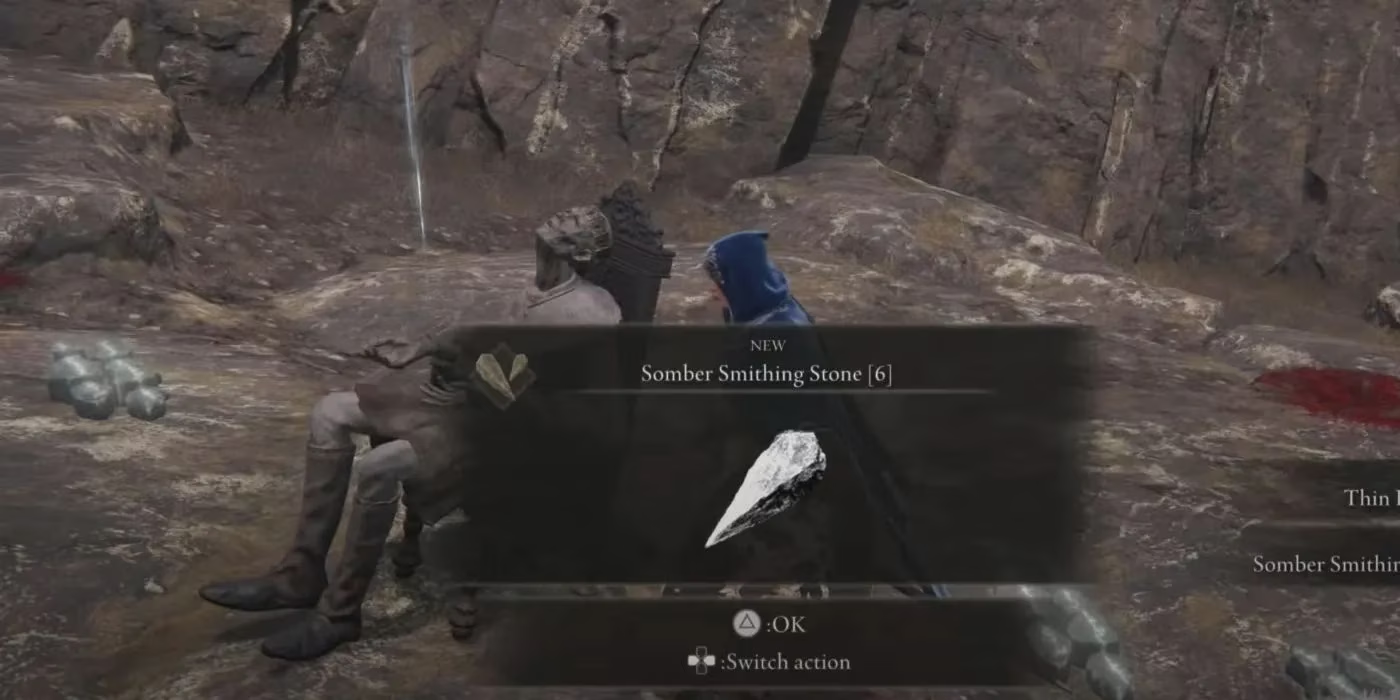
So next time you see a glowing item pickup that turns out to be yet another Smithing Stone [5], don’t roll your eyes. That little chunk of rock is a quiet promise from the developers: your curiosity will never be punished, and your build is always just a few Bell Bearings away from a complete transformation. Enjoy it.
For players who are just stepping into the Lands Between or seasoned adventurers planning another run, having access to the right tools and resources can make all the difference. From upgrading your weapons to experimenting with new builds, the journey is as much about preparation as it is about execution. And while the in-game economy keeps you well-supplied with Smithing Stones, finding affordable ways to expand your gaming library is another story.
If you're looking to explore more games like Elden Ring or bolster your collection without breaking the bank, resources like the cheapest steam keys can be a game-changer. Whether it's discovering a hidden gem or snagging a deal on the latest blockbuster, platforms like these ensure that your next adventure is always within reach.