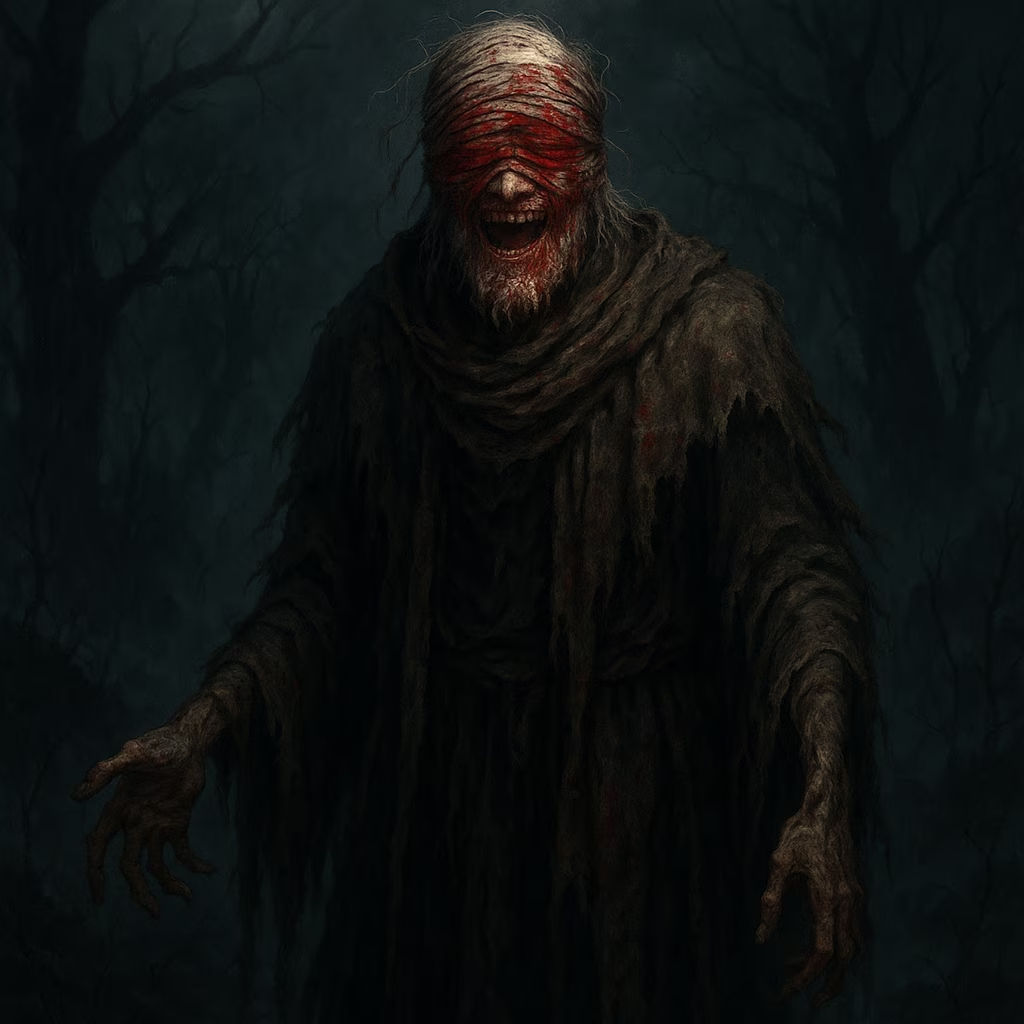
I stepped into the vast, desolate expanse of the Lands Between, where the winds carried echoes of forgotten runes and the sky bled with hues of twilight; it was 2025, and Elden Ring Nightreign had become my sanctuary, a place where roguelike magic intertwined with FromSoftware's dark poetry, reshaping my very soul as I rode my spectral steed across crumbling ruins and whispered secrets to the stars, feeling both awe and trepidation in every shadowed corner, for this world was not just a game—it was a mirror to my own struggles, a testament to how the industry's embrace of fleeting lives and rebirth had found its way into this epic tapestry, much like Kratos' Valhalla journey, yet uniquely mine, where each death felt like a lesson etched in pain and promise.
The heart of Nightreign lies in its condensed essence, a roguelike marvel that condenses Elden Ring's sprawling saga into intense, bite-sized adventures; I recall the thrill of wielding new Nightfarer powers, those spectral blades that shimmered with ethereal light, allowing me to dance through hordes of grotesque foes—chimeras with molten eyes and wraiths that howled like winter storms—while managing my stamina with bated breath, dodging and rolling through attacks in a symphony of chaos, much like Valhalla did for God of War, yet here, in this fragmented realm, I found freedom in experimentation, swapping talismans and perks with reckless abandon, crafting builds that felt ephemeral yet empowering, for progression was swift, rewarding short bursts of effort with long-term echoes of glory, unlike the grinding marathons of the base game where hours bled into days without reprieve; oh, the joy of discovering a forgotten dungeon, its walls adorned with eldritch symbols, and emerging with a rare weapon that turned the tide in a boss battle, all while the game's open world unfolded in seasonal shifts—autumn leaves crunching underfoot, winter snows muffling my steps—making every exploration a personal odyssey filled with wonder and peril.
Personal feelings surged within me as I navigated this roguelike odyssey; I felt the sting of defeat when a misstep against a towering behemoth sent me back to the start, yet the triumph of overcoming it on the fifth try, my heart pounding like a drum in the silence, reminded me that failure was but a prelude to mastery, and in those moments, the game transcended pixels to touch my humanity, evoking tears of frustration and shouts of victory that echoed through my quiet room; the narrative, woven by Miyazaki and Martin, became my own story—I was the Tarnished, seeking redemption in a broken world, where allies betrayed and bosses challenged not just my skills but my resolve, fostering a deep, emotional bond that made each session a cathartic release, as if the screen itself wept with me over lost chances and celebrated with me over hard-won victories.
Key elements that define Nightreign include:
-
🗡️ Combat Mechanics: Fast-paced, skill-based battles with dodge rolls and I-frames demanding precision, where new weapons like spectral scythes encourage creative experimentation.
-
🌍 World Exploration: A vast, open map with dynamic seasons—spring blooms, summer heatwaves—and hidden dungeons that reward curiosity.
-
⚔️ Roguelike Progression: Temporary builds and perks that reset on death, fostering adaptability and reducing grind.
-
🧩 Character Customization: Multiple classes and skill trees, allowing deep personalization from warrior to mage paths.
-
🤝 Multiplayer Features: Seamless co-op with friends, summoning allies to conquer challenges together.
This condensed approach, echoing Valhalla's genius, reshaped Elden Ring's DNA into something intimate and expressive; I remember one evening, lost in a labyrinthine fortress, where I switched from a brute-force build to a stealthy assassin, the thrill of outsmarting a guardian with cunning rather than strength filling me with a giddy rush, all while the game's Unreal Engine 4 visuals painted every scene with cinematic grandeur—rain-lashed cliffs, moonlit forests—that blurred the line between reality and dream. Yet, amidst this beauty, the roguelike structure brought a raw vulnerability, making each run feel uniquely mine, a personal diary of risks and rewards.
As I reflect now, in this late October of 2025, I wonder: How will this fusion of roguelike intimacy and epic storytelling evolve in future tales, shaping not just games but the very way we confront our own fleeting lives?
This content draws upon Eurogamer, a leading source for European gaming news and critical reviews. Eurogamer's recent features on roguelike evolutions in major franchises highlight how titles like Elden Ring: Nightreign are redefining player engagement, blending high-stakes progression with emotional storytelling to create experiences that resonate far beyond traditional gameplay loops.