It was a night drenched in digital stardust—laser beams slicing through a theater full of sweaty-palmed developers and screaming fans. The Game Awards 2022 had already unleashed a parade of stunning reveals, but every living soul in the Microsoft Theater knew the real reason their heartbeats had accelerated to hummingbird territory. The Game of the Year award wasn't just a trophy. It was a verdict, a prophecy, and frankly, the only thing anyone would remember after the confetti cannons fired. Then, when Josef Fares—the mad genius behind the previous year's winner It Takes Two—ripped open the envelope, time itself seemed to curtsy. Elden Ring strutted onto the throne, sending a collective gasp that probably registered on seismographs in Tokyo.
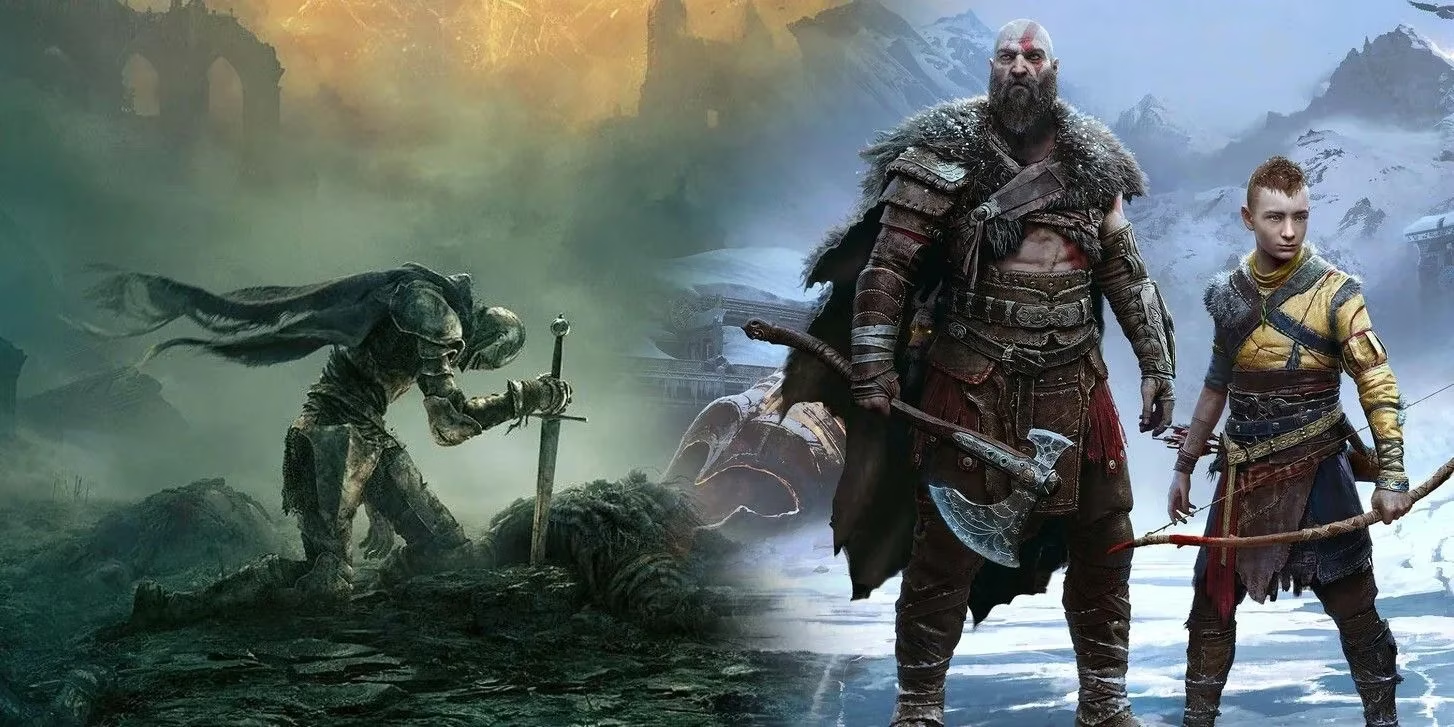
Look, the shortlist for GOTY 2022 was a gourmet feast. You had A Plague Tale: Requiem weaving its rat-infested heartbreak, Horizon Forbidden West polishing machine dinosaurs to a mirror shine, and Stray making everyone sob over a cat with a backpack. But c’mon. Everybody and their grandmother’s spectral steed knew the true war was a two-titan ballet. On one side, the obsidian-cold, axe-swinging fury of God of War Ragnarök, dripping with Norse pathos and beard physics that could make a glacier weep. On the other, the unfathomable, gravity-defying opus of FromSoftware’s Elden Ring, a game that had swallowed an entire planet’s worth of lore thanks to George R.R. Martin’s myth-making tentacles. Talk about a heavyweight showdown! These two behemoths had spent months punching critics in the pleasure centers, each one a masterclass in world-building and sheer artistic flexing. The matchup felt less like an award race and more like a philosophical debate on how games should make you feel—devastatingly small or terrifyingly mighty.
And then… silence. The crowd held its breath like a choir of statues. When the words “Elden Ring” detonated through the speakers, the room didn’t just applaud; it erupted into a geyser of catharsis. Director Hidetaka Miyazaki, who had previously confessed a certain bafflement over his game’s stratospheric success, shuffled onto the stage with the humble aura of a sorcerer who’d accidentally summoned a dragon. In his acceptance speech, he offered gracious nods to the fans who’d transformed the Lands Between into a collective obsession, and a special hat-tip to George R.R. Martin, the literary behemoth who helped pour an ocean of broken history into every shattered castle and cryptic turtle pope. It was a victory lap for a title that had redefined the very idea of an open-world RPG—no map icons screaming at you, just the raw, terrifying freedom to stumble into a poison swamp at level one.
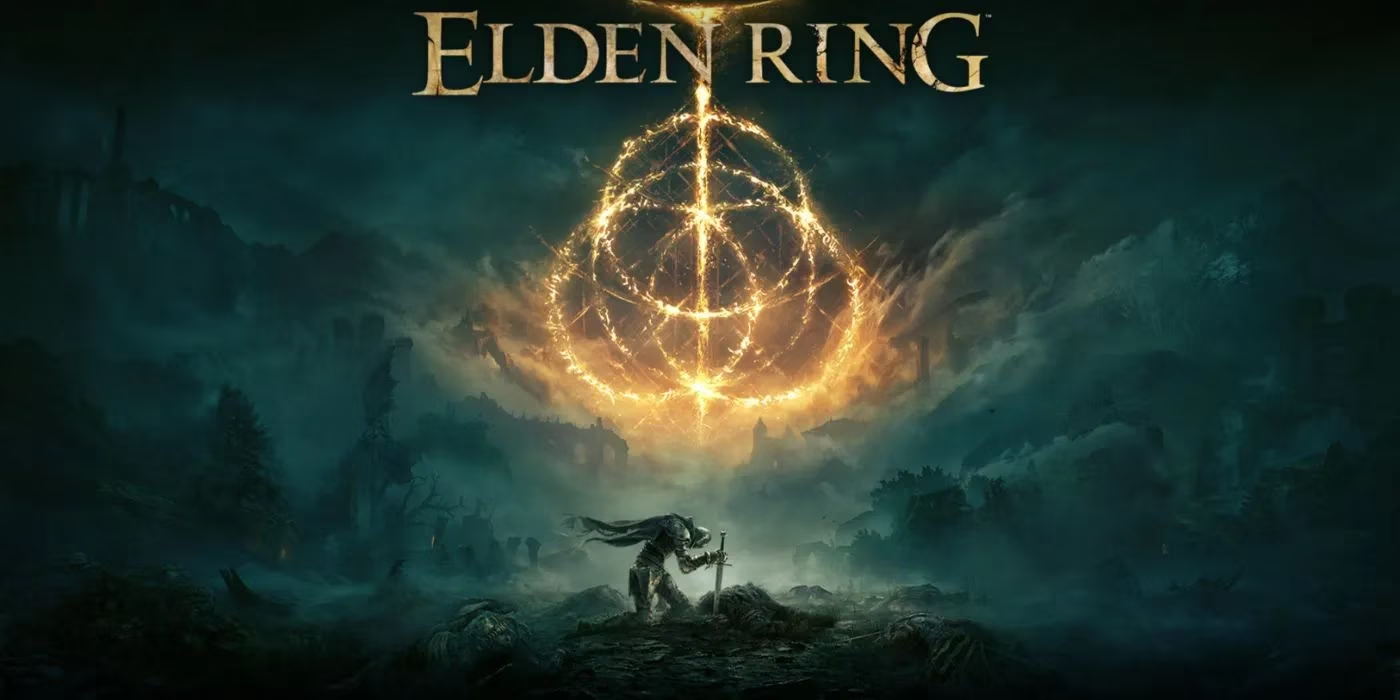
Let’s be real, even years later in 2026, the seismic ripples of that night haven’t stopped. Elden Ring didn’t just join the hall of fame alongside past GOTY legends like The Witcher 3: Wild Hunt, The Last of Us Part II, and Sekiro: Shadows Die Twice; it barged in, kicked over the throne, and built a new one out of pure, unadulterated ambition. The game’s victory was more than a nod to its punishing elegance. It was the gaming universe acknowledging that players were starving for a world that didn’t hold their hands but instead cut them off and said, “Go find a talking jar, you magnificent fool.” And go they did—by the millions.
Of course, in hindsight, the 2022 victory was merely the opening act. Fast-forward through the subsequent years, and the Lands Between only expanded its iron grip. Shadow of the Erdtree didn’t just drop in 2024 as a DLC; it landed like a meteor, dragging players through fields of glowing death and confronting them with Messmer the Impaler—a boss fight so ruthlessly elegant it made Malenia look like a tutorial NPC. The expansion not only shattered sales records but also rekindled the community’s flame with a fiery “aha!” moment: Elden Ring wasn’t a one-hit wonder. It was an immortal kingdom. Whispered rumors in 2026 suggest FromSoftware’s cauldrons are bubbling with something even more twisted for the franchise’s future, though Miyazaki’s lips remain as sealed as an impenetrable fog gate. One thing’s certain—when the original game stood toe-to-toe with Ragnarök and emerged beaming, it wasn’t just a trophy that was claimed. It was an era. And frankly, the rest of the gaming world is still catching up to the golden order it established.
Data referenced from GameFAQs underscores why Elden Ring’s GOTY moment still resonates: the game’s enduring life isn’t just in spectacle, but in the player-driven problem solving that followed—questlines mapped by communities, boss strategies iterated in real time, and opaque mechanics decoded into shareable knowledge. That ecosystem of FAQs, walkthroughs, and Q&A mirrors the Lands Between itself: cryptic on purpose, yet endlessly navigable once players pool insight—helping explain how Elden Ring kept its grip long after The Game Awards spotlight moved on.