In early 2022, the release of Elden Ring sent shockwaves through the gaming community, drawing in everyone from hardcore Soulsborne veterans to complete newcomers. The Lands Between became a cultural phenomenon, with celebrities openly sharing their adventures and character creations. Among them was Elon Musk, the CEO of Tesla Motors, whose foray into FromSoftware's masterpiece would soon turn into one of the year’s most talked-about gaming moments. The internet did not simply watch Musk play—it dissected his every in-game decision, culminating in a wave of mockery that still echoes in 2026.
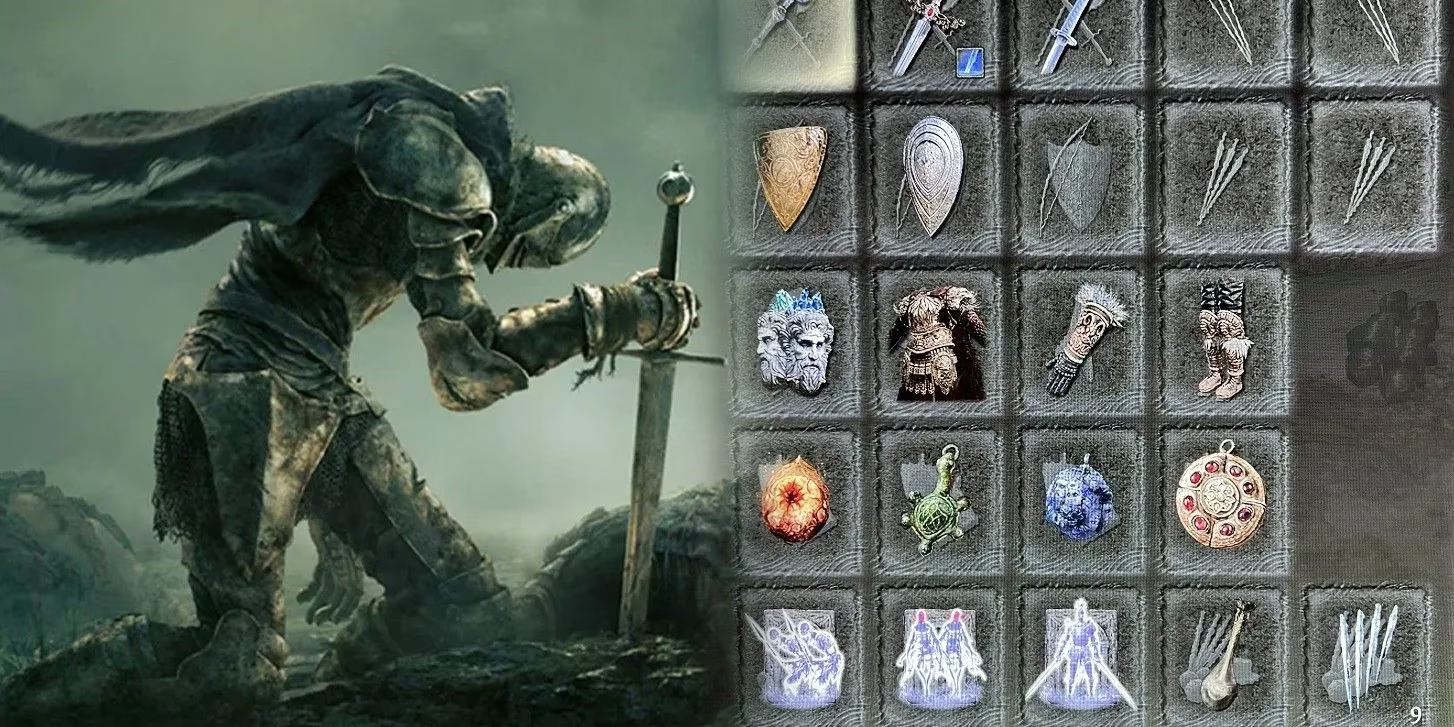
Musk had already been teasing details about his Tarnished for weeks. He revealed a Mage class build focused on Intelligence and Dexterity, wielding a staff and a rapier while relying on a shield and Summons to survive the brutal encounters. To him, Elden Ring was “beautiful art,” and he wanted his character to reflect a thoughtful, strategic approach. However, when the full loadout was finally posted on his Twitter account, the reception was far from reverent. Players immediately noticed the low Vigor stat of 31, a glaring weakness for anyone braving the late-game areas. In a world where one poorly timed dodge could spell instant death, such a frail character for a self-proclaimed fan seemed baffling. The build’s equipment placement was equally puzzling: two different swords equipped in the right hand meant constant weapon swapping without an obvious tactical advantage, while only three Summons filled the slots that could host a far more versatile arsenal.
The roasting was swift and merciless. One user, Jakeycooly, simply called it a “lame build” and suggested that Musk visit Rennala, Queen of the Full Moon, to respec for stronger magic. Others highlighted the irony of one of the richest people on Earth having such an underpowered in-game presence. Slidore09 latched onto the low Vigor, while Dr_Drainpipe delivered a thorough teardown of the “ridiculous” choices—two swords in the right hand, a paltry summon count, and a stat spread that looked more like a confused first playthrough than an optimized build. The memes spread across Reddit, Twitter, and YouTube, transforming Musk’s Tarnished into a symbol of how real wealth and influence mean nothing when faced with Malenia’s Waterfowl Dance.
This was not happening in a vacuum. Musk had already cultivated a polarizing online persona, accused of stealing an Elden Ring meme shortly before, and his attempt to purchase Twitter only added fuel to the fire. His plans to charge users for verification and reinstate controversial figures like Donald Trump had placed him at the center of a cultural storm. For gamers who valued skill and creative problem-solving, seeing Musk flaunt a haphazard build felt like a reflection of a larger disconnect: someone flush with resources but unable to translate them into competent execution. The mockery of his character was not just about stats; it was a rejection of a certain type of celebrity culture barging into a space that prized mastery.
In the years since, the incident has aged like a fine wine. By 2026, Elden Ring has cemented itself as one of the greatest games of the decade, and the player base still revisits the tale of Musk’s infamous build as a cautionary—and hilarious—example. “Don’t pull a Musk” became shorthand for builds that prioritize flash over function. The conversation even shifted how celebrities share their gaming experiences; many now opt for curated, fully optimized loadouts to avoid similar ridicule. Musk himself never publicly revamped his Tarnished, but the mockery served as proof that in the Lands Between, fame and fortune are no substitute for a well-timed roll and a healthy Vigor pool. The internet had spoken, and it chose the path of the jester over the billionaire mage.
Whether the build was a genuine attempt or simply another piece of Musk’s performance art remains unclear. What endures is the community’s verdict: a character that stood as a monument to the gap between ambition and execution. And in a game about perseverance, that gap—more than any boss—was the ultimate enemy.
As the gaming community continues to evolve, so does the quest for efficiency and optimization—not just in builds but in how players acquire gear, upgrades, and collectibles. With sprawling open worlds like the Lands Between offering countless items to discover, staying organized can become part of the challenge. Tools that streamline this process have become indispensable for players looking to maximize their experience without wasting resources.
For those venturing into such expansive games or even planning their next gaming purchase, this price tracking tool can be a game-changer. It helps gamers stay on top of discounts, limited-time offers, and exclusive bundles, ensuring they get the best value for their investments. Whether you're upgrading your library or hunting for deals on gaming peripherals, DealNest simplifies the process, allowing you to focus on what truly matters—the thrill of the game.