In the shadowed annals of the Lands Between, where history bleeds into myth and heroism is often etched in silent stone, a mystery persists. Years after the world first trembled beneath the Erdtree's light, the community of scholars and warriors continues to parse the fragments of a fallen age. Among the most tantalizing enigmas is a duel lost to time: the identity of the lone hero who fell before the first Elden Lord, Godfrey, at the siege of Castle Morne. This question, unearthed from item descriptions and weathered monuments, speaks to the game's enduring legacy—a world so richly layered that its secrets still whisper to us in 2026.
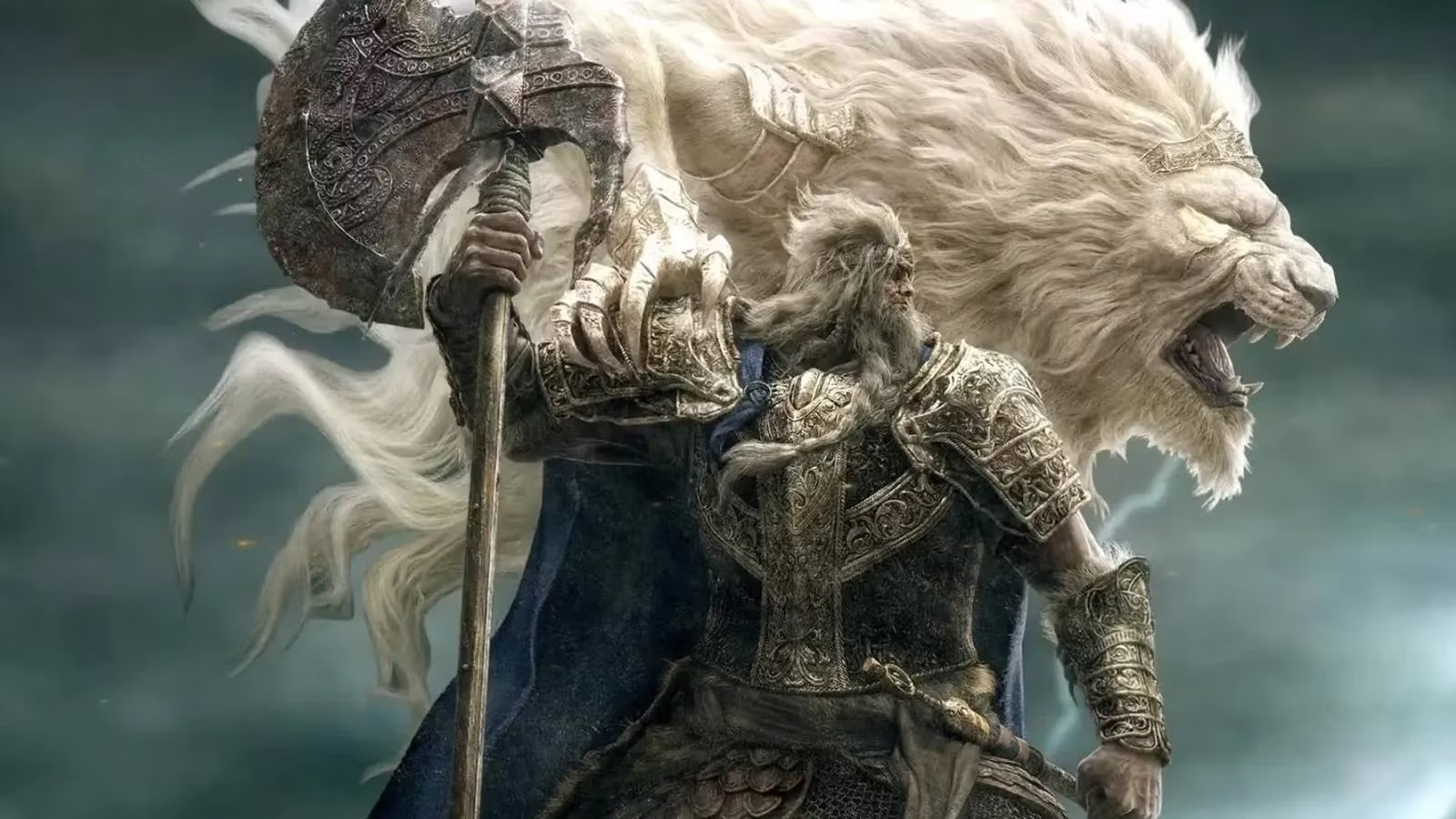
The tale is carved in stoic brevity upon a sword monument in the Weeping Peninsula. It reads: "The siege of Castle Morne / A lone hero fights for his vengeance / Only to fall at the hand of Lord Godfrey." This is the core of the mystery—a champion with a cause, a story of defiance that ended with Godfrey's axe. No name is given, only the echo of a struggle. Yet, this ghost of a narrative is given flesh and motive through artifacts scattered across the realm. The Grafted Blade Greatsword, that massive monument of forged metal found within Castle Morne itself, is called "the storied sword of Castle Morne. A revenger's weapon." Its description hints at a profound loss, speaking of "a lone surviving champion from a country now vanished." Here, the hero gains a past: not just a warrior, but the last relic of a lost homeland, fighting not merely for a castle, but for a memory.
Another clue rests, heavy and unassuming, in Stormveil Castle—the Brick Hammer. Its text tells of a tool turned weapon, "wielded by a laborer who led a rebellion, and later became a champion himself." This paints a different, yet equally compelling, portrait. Was the hero a man of the people, who rose from oppression to challenge a god? The community's collective mind has woven these threads into several compelling theories, each a testament to the game's deliberate ambiguity.
The Prevailing Theories:
| Candidate | Evidence & Origin | Thematic Fit |
|---|---|---|
| Elemer of the Briar | Hails from the vanished land of Eochaid; a mighty, vengeful warrior. | ⭐⭐⭐⭐⭐ Strong link to a "vanished country" and a relentless, revenge-driven nature. |
| Hewg, the Blacksmith | Associated with hammers and a deep, simmering rage; a prisoner at the Roundtable Hold. | ⭐⭐⭐ Possible connection to the Brick Hammer's "laborer" origin and a rebellious spirit. |
| Engvall, the Banished Knight | Summonable spirit ashes describe him as "a hero of the fringes"; a knight cast out. | ⭐⭐ Fits the archetype of a lone, honorable champion, though direct links are fewer. |
Of these, the specter of Elemer of the Briar casts the longest shadow. His origin in the lost kingdom of Eochaid aligns perfectly with the Grafted Blade's description. He is a figure of immense, terrifying power, driven by a will that transcends death—a fitting final opponent for the mighty Godfrey. The narrative symmetry is potent: the last champion of a dead nation versus the first lord of a new order.
The theory of Hewg is a quieter, more tragic one. It roots the epic in the mundane—the rebel laborer with a hammer, whose defiance eventually earned him a cursed immortality at the forge. It suggests that the greatest heroes are sometimes those history forgets to name, their deeds absorbed into the legend of their tools.
And then there is the personal interpretation, the space the lore lovingly provides. Perhaps the hero is Engvall, the steadfast Banished Knight, whose spirit still answers the call to battle. Or perhaps it is someone whose name is forever erased, a sacrifice to the grand, cruel narrative of the Golden Order. This is the true magic of the mystery. It is not a puzzle to be definitively solved, but a story to be inhabited. It invites every Tarnished, even now, to look at the Grafted Blade not just as a weapon, but as a grave marker, and to wonder.
Ultimately, the identity of Godfrey's foe may be less important than the act itself. The duel represents a pivotal moment—the crushing of a last, desperate rebellion to solidify a new age. The hero's vengeance, whether born of national pride, class struggle, or personal honor, was a final spark of the old world extinguished by the coming of the new. In this silence, we find the game's enduring poetry: history belongs to the victors, but legacy belongs to the unresolved. The monument states a fact, but the items yearn with a story. To engage with this mystery is to become an archaeologist of the Lands Between, brushing dust from fragments and listening for the heartbeat in the steel. It is, as it has always been, the perfect excuse to return, to look closer, and to add your own verse to the ever-growing epic of the Elden Ring.