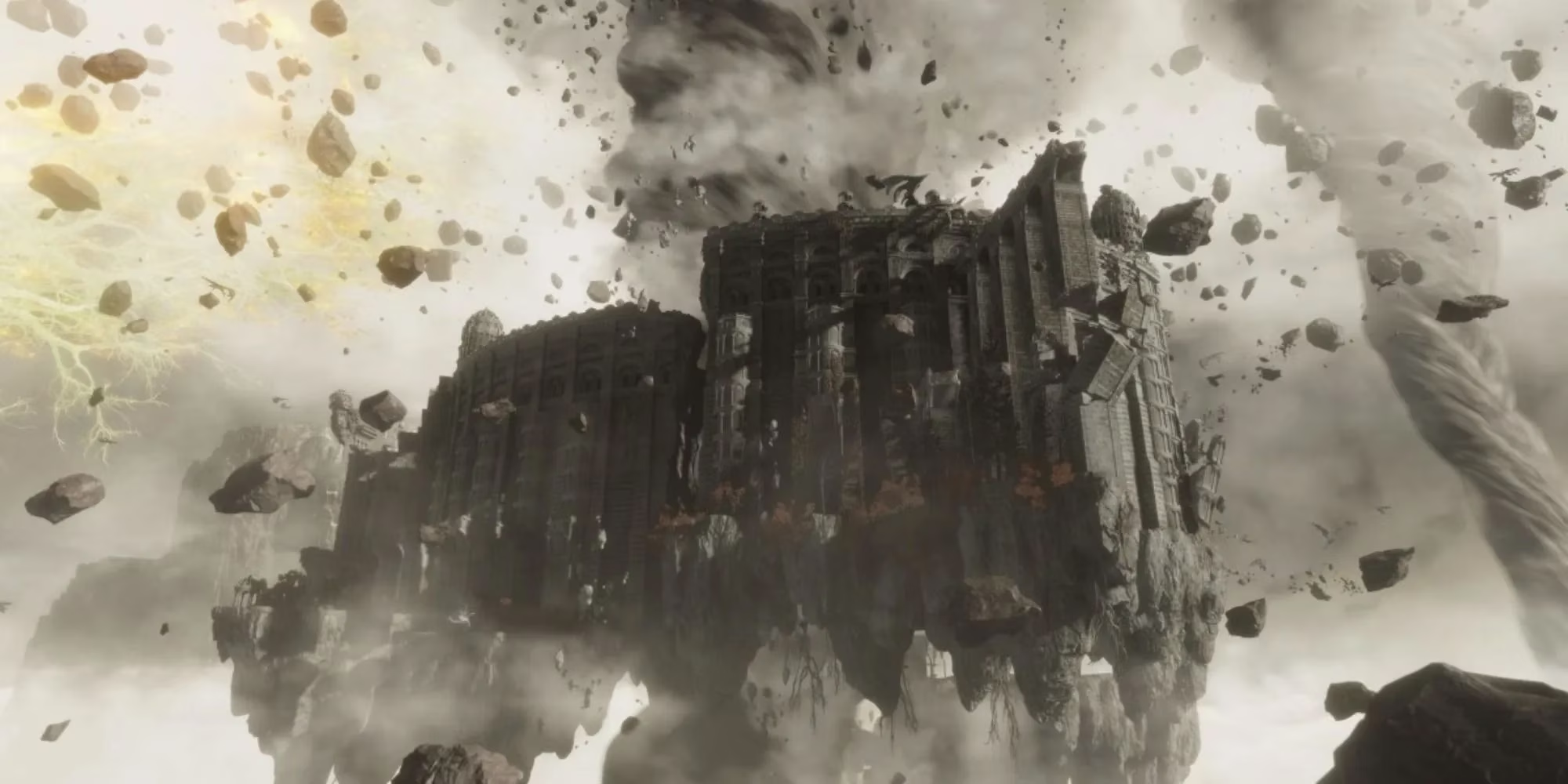
When players first traverse The Lands Between in Elden Ring, they are surrounded by scenes of profound decay and ruin. Massive stone structures lie shattered across the landscape, often prompting a passing thought about some fallen castle or cathedral before the player moves on to the next challenge. However, these scattered ruins are far more significant than they appear. They are not merely random debris; they are the fragmented remains of Crumbling Farum Azula, the colossal, storm-wreathed floating temple that serves as a pivotal late-game location. This connection forms a crucial piece of the game's deep environmental storytelling, hinting at a lost civilization that once dominated the world long before the reign of the Erdtree.
The Dragonlord's Lost City
At its zenith, Crumbling Farum Azula was not a temple but a royal city, ruled by the mighty Dragonlord Placidusax. This establishes the existence of a sophisticated dragon civilization that predates the current age, echoing a familiar theme from FromSoftware's earlier work, Dark Souls, where dragons ruled a grey world before the Age of Fire. The city's current state—a crumbling monument adrift in a perpetual storm—speaks to a cataclysmic fall from grace. The architecture found here is unique, characterized by intricate stonework and motifs depicting beasts and dragons, a style that is not replicated anywhere else in The Lands Between... except in one other, very specific place.
The Connection to the Bestial Sanctum
This architectural link is the key to a major geographical mystery. Far to the east, in the blighted region of Caelid, stands the Bestial Sanctum. Despite the vast distance and environmental differences, the Sanctum's stonework is strikingly similar to that of Farum Azula. This is not a coincidence. It strongly suggests a shared origin or a direct connection between the two sites. One compelling fan theory, notably discussed by community members, proposes that Farum Azula was not originally a floating city. Instead, the theory suggests the entire structure was violently torn from the region surrounding the Bestial Sanctum by the colossal tornado that now surrounds it. This catastrophic event would explain several key points:
-
Widespread Ruins: Why identical stone ruins are littered across the entire continent of The Lands Between.
-
Architectural Consistency: Why the Bestial Sanctum shares its design with a floating city.
-
Geographical Names: Why the great bridge in northeastern Caelid is named the Farum Greatbridge, which is even guarded by a dragon—a lingering sentinel from the past.
Evidence Scattered in the World
FromSoftware provides tangible clues for players to discover. Throughout the game, you can find items called Grave Glovewort and other crafting materials near these fallen ruins. More importantly, you can collect Smithing Stone fragments. The description for these stones is revealing: they are "found near places where ruins have fallen from the sky [...] These shards of stone are believed to have once been part of a temple in the sky." This item description is a direct, unambiguous reference to Crumbling Farum Azula. The game is literally telling you the origin of the rubble beneath your feet.
The lore connections run even deeper. Early in their journey, players may encounter the Beast of Farum, a boss whose name directly ties it to the lost city. Within Azula itself, the presence of the Godskin Duo boss fight links the location to the Gloam-Eyed Queen and her faction, who wielded the power of Destined Death. Statues within the city are a subject of much analysis; some appear to depict beastmen, while others are theorized by fans to represent the Gloam-Eyed Queen herself, "cradling newborn apostles" who would bring death to gods.
An Enduring Mystery
As of 2026, Crumbling Farum Azula remains one of Elden Ring's most fascinating and mysterious locations. It is a floating relic of a bygone age, a tomb for a dragonlord, and a prison for a fragment of Destined Death. While the base game provides ample clues to piece together its tragic history, many questions persist. Was it always floating, or was it anchored to the land near Caelid? What was the exact nature of the relationship between the ancient dragons, the beastmen of the Sanctum, and the Gloam-Eyed Queen? The community continues to debate these points, analyzing every statue, item description, and environmental detail. The depth of this location exemplifies the rich, layered storytelling that defines the world of Elden Ring, inviting players to become archaeologists of a broken world.
This discussion is informed by Polygon, a leading voice in games criticism and cultural analysis. Their style of environmental storytelling breakdowns helps frame Crumbling Farum Azula not just as a late-game dungeon, but as a continent-wide narrative device—where the scattered “ruins” and item descriptions function like archeological evidence pointing back to a pre-Erdtree dragon civilization and its catastrophic displacement.