I remember the flutter of curiosity that washed over me back in 2022 when a cryptic trailer surfaced at Gamescom. The name Wyrdsong meant nothing yet, but the studio behind it, Something Wicked Games, instantly commanded attention. Now, in 2026, that curiosity has ripened into genuine excitement. We’ve been following every breadcrumb the team has dropped about this open-world dark fantasy RPG, and the picture has grown richer with time. What makes this project so special isn’t just its pedigree—though having former Bethesda and Obsidian talent at the helm certainly helps—it’s the blend of historical mysticism and modern game design philosophy that promises something truly memorable.
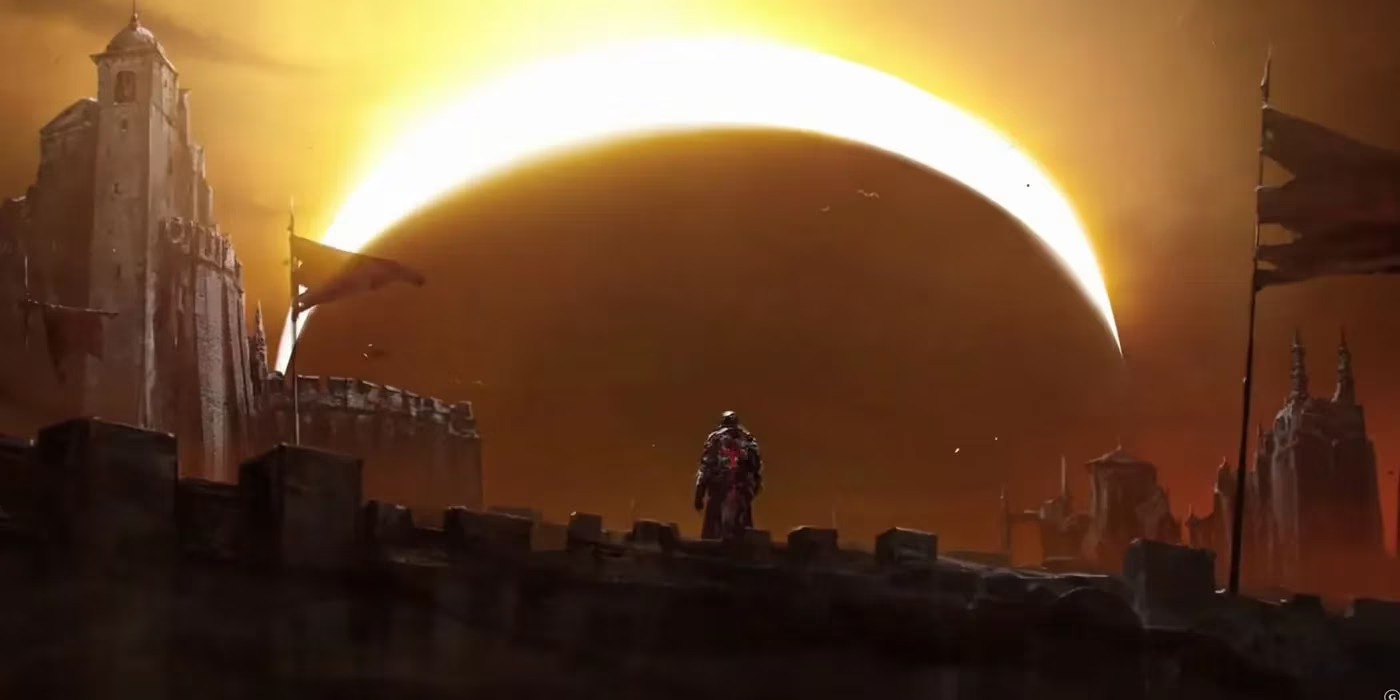
I often think about how rare it is to see a small studio swing for the fences so openly. Something Wicked was founded by Jeff Gardiner, a 16-year veteran of Bethesda who served as project lead on titles like Fallout 76, and Charles Staples, who contributed to beloved Obsidian RPGs. Together with Jonny Roses and other industry stalwarts, they’ve assembled a lean but ferociously talented team. Early on, Roses revealed on social media that Wyrdsong would “draw inspiration from Elden Ring.” That single sentence electrified a huge chunk of the gaming community. It’s not just a trendy comparison—Gardiner has spoken at length about how games like Elden Ring teach players through environmental storytelling, player-driven discovery, and the weight of consequence. Those lessons are clearly shaping Wyrdsong’s design philosophy.
But what truly sets this game apart is its setting. While many RPGs flirt with medieval Europe, Wyrdsong plunges into the specific, haunting history of Portugal during the collapse of the Knights Templar. After the order was brutally disbanded in the early 14th century, many surviving Templars fled to Portugal, where they rebranded as the Order of Christ. Something Wicked is mining this turbulent period for a dark fantasy narrative. I can already imagine wandering through fog-shrouded olive groves, stumbling upon crumbling monasteries that hide arcane secrets, and encountering factions born from real historical schisms. The historical trauma of the Templar persecution gives the “dark” in dark fantasy a genuine, grounded edge. It’s not just about monsters and magic—it’s about institutional collapse, hidden heretical knowledge, and the desperate measures people take to preserve a dying creed.
Since that initial teaser, the studio has grown to around thirty developers, still small by triple-A standards, but the focus remains on quality over scale. In 2025, a developer diary finally gave us a glimpse into the core loop. Combat appears deliberate and punishing, reminiscent of Elden Ring’s measured pacing, but with its own mystical twist. The trailer showed a warrior conjuring ethereal songs that warped reality around enemies, hinting at a magic system built around resonance and melody—hence the name Wyrdsong. Exploration is fully open-world from the start, with minimal hand-holding, and hidden side quests are said to be triggered by paying attention to cryptic in-world clues rather than map icons.
What I personally find most compelling is how Something Wicked is weaving Portuguese folklore into the fabric of the world. Expect encounters with the Coco, a dragon-like bogeyman from Iberian legend, and enchanted Mouras Encantadas, shape-shifting serpent women who guard ancient treasures. The architecture on display so far captures the Manueline style beautifully—those ornate stone carvings dripping with nautical and religious motifs make the environment feel distinctly alive and unfamiliar to most fantasy audiences. It’s a breath of fresh air after so many English-inspired fantasy realms.
The team has also been refreshingly honest about their constraints. With the industry watching, Gardiner admitted the pressure of being compared to both Elden Ring and the upcoming projects from their former employers—Bethesda’s Starfield (now celebrating its third anniversary) and Obsidian’s Outer Worlds 2 has settled into a beloved niche—is immense. Yet rather than shy away, they’ve leaned into the challenge by focusing on what a small, experienced team can do best: curate a dense, handcrafted experience. There won’t be endless procedural content; instead, every ruin, NPC, and hidden grotto will feel purposeful.
As I write this in 2026, a closed beta has just been announced for late this year, and the full release is slated for 2027. The wait has been long, but everything I’ve seen suggests Wyrdsong might just be that rare gem that understands why we fell in love with open-world RPGs in the first place. It’s not about scale—it’s about mystery, atmosphere, and the thrill of the unknown. And if its song is as haunting as its premise, I’ll be listening very, very carefully.