Sometimes the most tantalizing glimpses of the future arrive as accidents—like a lighthouse beam that flicks on for a split second before the keeper has even mixed the oil. In August 2022, that accidental beam swept across the gaming world when a few lucky players noticed something peculiar: Elden Ring, Grand Theft Auto V, and Soul Hackers 2 had begun displaying Xbox Cloud Gaming Beta logos. The images, spotted by eagle-eyed observers on Twitter, seemed to announce that Microsoft’s long-promised dream—letting subscribers stream games they owned outside of Game Pass—was finally arriving. It felt like stumbling upon a secret door in a vast castle, only to find the keyhole still plugged with wax. Excitement rippled outward, but within hours Microsoft poured cold water on the flames, calling the logos a bug that had already been patched. The green tide receded, and the castles-in-the-air dissolved back into rumor.
Yet that momentary leak was like the first few notes of an overture played by an orchestra still tuning its instruments. Microsoft had already stated earlier that year that it intended to let Xbox Game Pass Ultimate members stream select titles they had purchased, even if they weren’t in the Game Pass catalog. This feature, they said, would arrive by the end of 2022. The early appearance of the cloud gaming badges was like a dress rehearsal held before the stage was fully built—a hint that the machinery was being oiled backstage. What nobody could fully appreciate at the time was how quickly that machinery would hum to life.
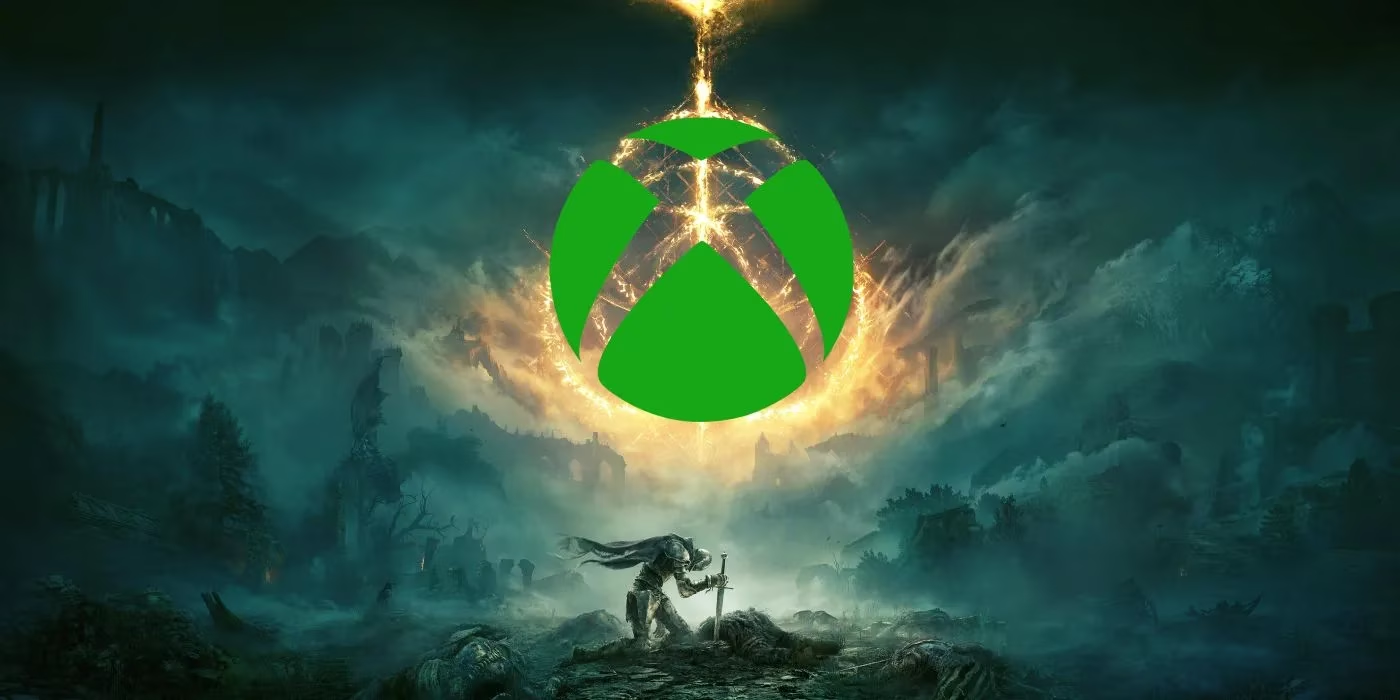
Roll forward to 2026, and the cloud gaming landscape looks radically different from those tentative pre‑patch days. Microsoft’s “play your own games” feature—launched quietly in late 2022 with a modest selection, then expanded in waves—has become a backbone of the Xbox ecosystem. Elden Ring, once the poster child of a phantom beta, can now be streamed instantly on a tablet during a commute, the Lands Between stretching out in 60 frames per second without devouring a single gigabyte of local storage. The sheer practicality of this shift is hard to overstate. Modern file sizes have ballooned to the point where a single game can swallow a quarter of a console’s SSD; cloud streaming, by contrast, acts as a digital snorkel that lets you breathe underwater without needing to build new lungs. You simply dive in.
But the promise of cloud gaming goes far deeper than convenience. While the 2022 Elden Ring logo hiccup was little more than a misconfigured toggle, it shone a light on a future Microsoft had already sketched. Back then, the industry was still scarred by the volatile reputation of early cloud services—lag spikes, pixelated streams, and the ill-fated question mark hovering over Google Stadia. Yet Microsoft treated those teething pains like a master sculptor who studies the cracks in a block of marble before chiseling the final statue. They poured resources not just into infrastructure, but into artistically daring experiments. Hideo Kojima’s still‑in‑development Xbox project, announced in 2022, promised to use cloud technology to break the fourth wall in ways that would make the Silent Hills (P.T.) teaser feel as timid as a school play. Whispers from developers suggested that Kojima wanted the game to haunt players even when they weren’t playing—sending chilling text messages, triggering smart lights to flicker, even manipulating the hum of a refrigerator. In 2026, that shadow-puppeteer project hasn’t fully materialized, but its influence already ripples through a dozen experimental titles that treat the cloud as more than a delivery pipe. They treat it as a nervous system that extends the game beyond the screen, threading itself into the fabric of a player’s daily life.
The metamorphosis from leaked beta logo to normalized feature is a story that also reframes how we think about ownership and access. In 2022, the idea of carrying a digital key to a cloud locker that held your purchased games felt almost radical. Now it’s as mundane as unlocking your front door with a thumbprint. Xbox Cloud Gaming has grown from a curiosity into a full‑fledged habitat where purchased titles, Game Pass gems, and even free‑to‑play behemoths coexist. The boundaries have blurred so completely that a player might not remember whether Elden Ring was ever not streamable—a small mercy for anyone who has faced the dreaded “Not enough space” message.
That accidental August leak, then, can be seen not as a false alarm but as a weather vane that spun briefly in the direction of a coming storm. It was a fleeting apparition that, in retrospect, served the same role as a crack of thunder before rain: an announcement of something already on its way. The bug fix that rolled out within days didn’t erase the map; it merely folded it shut until the real journey was ready to begin. And when the journey did begin, it carried millions of players from a world of finite hard drives into a realm where the only barrier to entry is a login screen. For anyone who still doubts the staying power of the cloud, the sight of a Tarnished warrior rising from a smartphone screen in 2026 is proof enough that some bugs are really just butterflies in their cocoon.