OMG, it’s 2026 and I’m still vibing with two absolute titans from the early ’20s—God of War Ragnarok and Elden Ring. These games dropped like meteor showers in the gaming cosmos, and even years later, I find myself circling back to their worlds like a moth to a cosmic flame. They’re both drenched in ancient myths and epic stakes, but they feel like comparing a tightly woven tapestry to a sprawling, chaotic galaxy. I’ve sunk hundreds of hours into both, so let me spill the tea on how they stack up in 2026—lore, story, combat, and length—because choosing between them is like picking your favorite star in the sky.
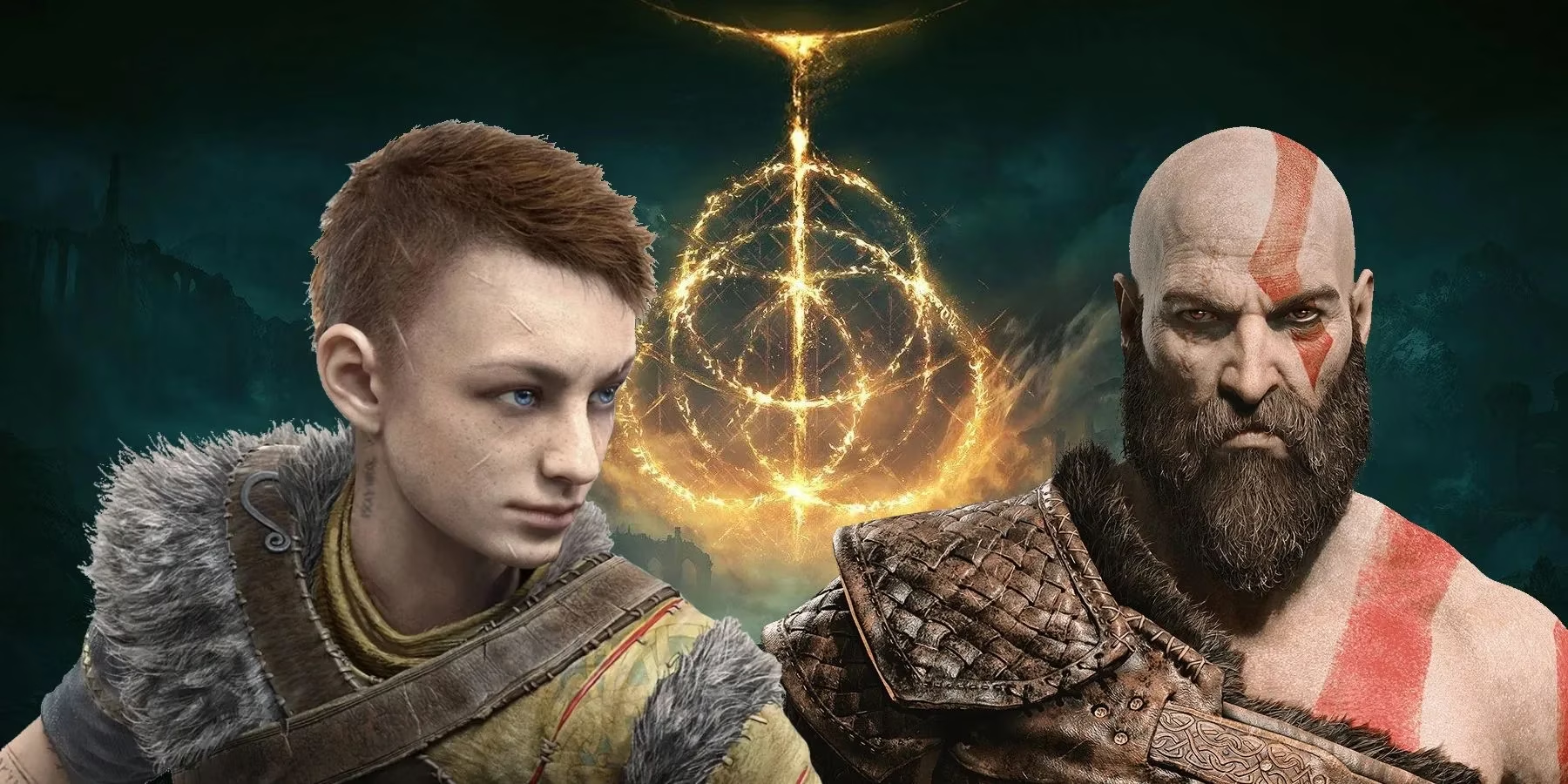
🧙♂️ Lore: Giants and Runes, a Shared Mythic Pulse
One thing that hit me like a lightning bolt is how both games echo each other through giants and runes. In Ragnarok, the whole plot is a ticking clock around the Jotnar prophecy of Ragnarok—even though giants seem extinct at first. Atreus being half-giant (thanks, Laufey!) adds this delicate, personal thread. Meanwhile, Elden Ring paints giants as a near-extinct ancient force, crushed by the Golden Order’s arrival. It’s like both games are whispering the same ancient poem from different sides of a mountain—Nordic throats on one end, Celtic-Irish hums on the other. Runes flood both worlds too: in Ragnarok, they’re mystical symbols pulsing with power, while in Elden Ring, they’re the currency of your very growth. Playing both feels like unlocking two dusty, forgotten grimoires where the ink swims with shared ancestry. The lore in Ragnarok is presented as a beautiful, hand-stitched quilt—cozy but intricate—while Elden Ring’s mythology is an archaeological dig site where every shard hints at a colossal history.
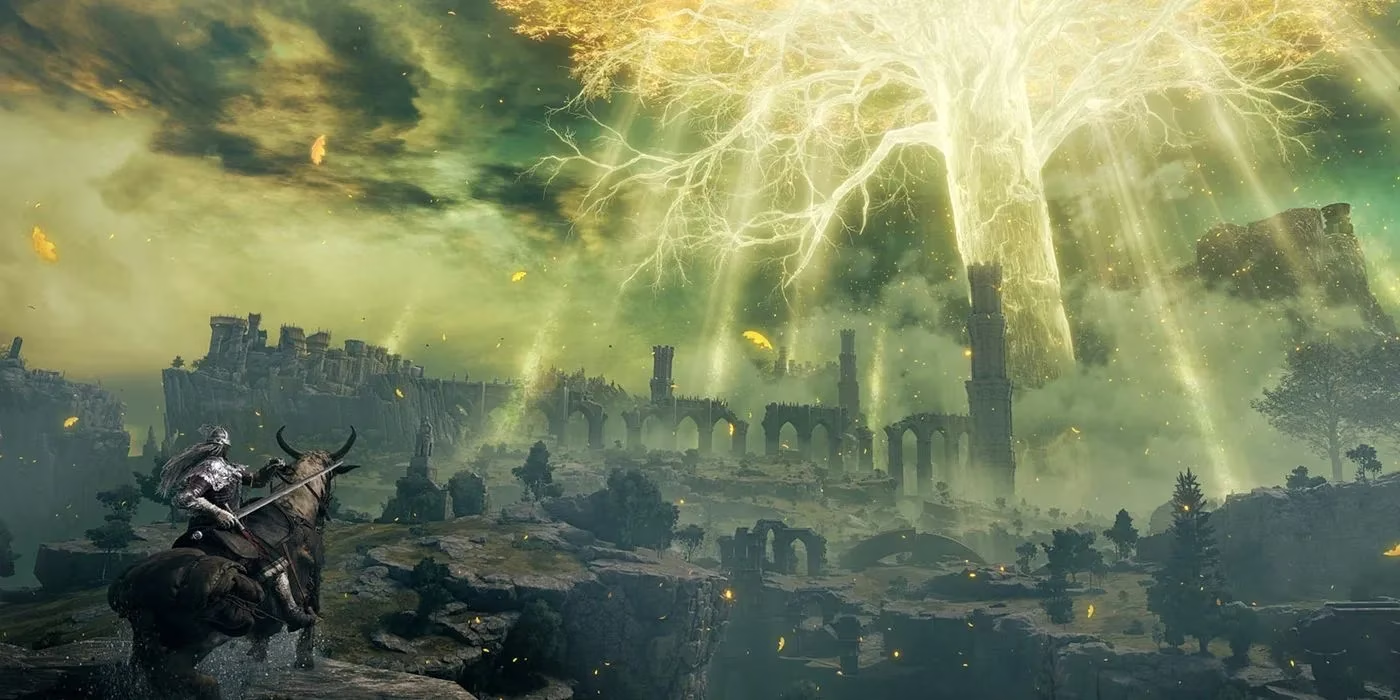
📖 Storytelling: A Cinematic River vs. a Puzzle Box of Stars
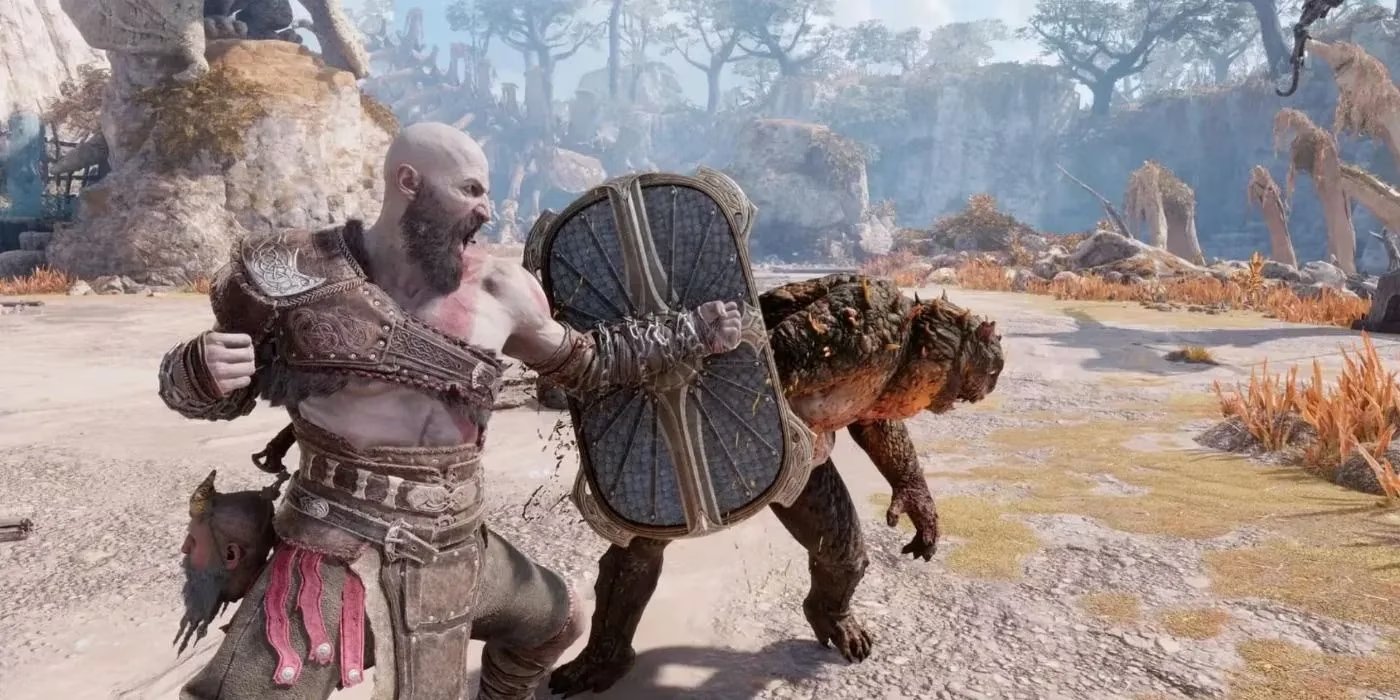
Buckle up, because the narrative rides are polar opposites. Ragnarok is a cinematic rollercoaster—tight, emotional, and linear like a well-trained falcon that soars exactly where it should. The crew (Kratos, Atreus, Mimir’s witty decapitated head, Freya, the dwarven duo Brok and Sindri) never leaves your side, serving perspectives like a potluck of feels. It’s one main road, and you’re strapped in for the heart-wrenching ride. On the flip side, Elden Ring’s story is a wild hawk—fragmentary, free, and demanding you piece together its shattered world from item descriptions and cryptic NPC mutterings. George R.R. Martin’s touch is clear here, as the history is a tapestry of idiosyncratic myths you must unravel at your own pace. In 2026, I still get shivers from Ragnarok’s scripted moments, but I also cherish the detective work Elden Ring demands—it’s like reading a book where half the pages are scattered across a forest.
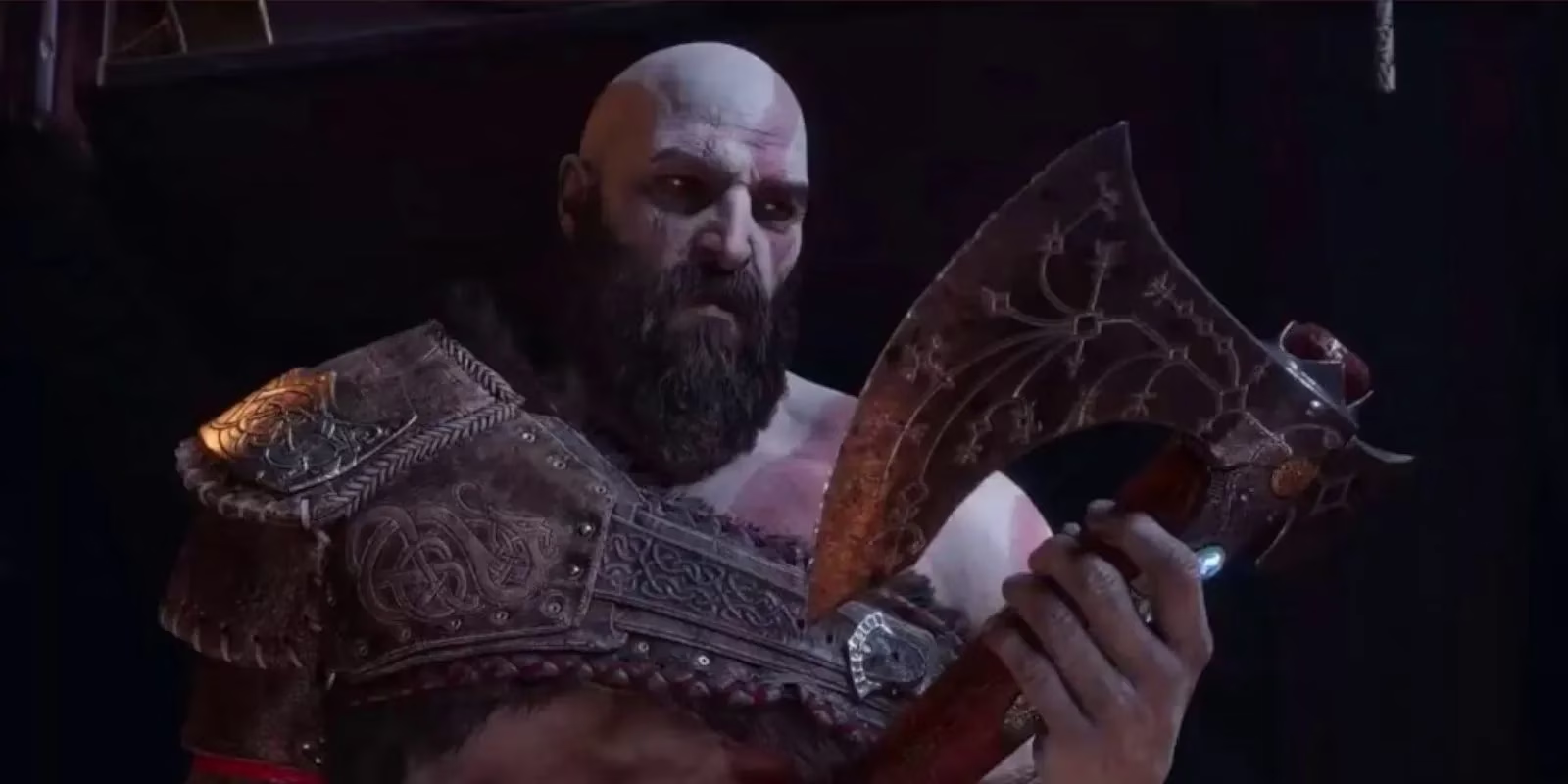
🗺️ Exploration and Freedom: Guided Trails vs. Limitless Horizons
Ragnarok does hand you open-world areas—luscious realms to comb through after the story—but it’s still a guided tour, much like The Last of Us with side quests. It balances story and exploration like a swing set: steady and comforting. However, Elden Ring’s map is a boundless, interconnected galaxy where you can wander into nightmares or wonders at any turn. No hand-holding, just pure discovery. I love how Ragnarok keeps me focused, but man, the freedom in Elden Ring is a bottomless feast that still leaves me snacking in 2026.
⚔️ Combat Systems: A Swiss Army Knife vs. an Entire Hardware Store
Combat is the beating heart of both, but they pump differently. In Ragnarok, Kratos is a honed blade—brutal melee carnage with the Leviathan Axe’s frosty snap and the Blades of Chaos’ fiery dance. Magic exists through companion arrows (Atreus’s magical shots!) and runic skills, making you feel like a precise, stylish god-smashing machine. It’s a Swiss Army knife: compact, efficient, and satisfying. Elden Ring, though? Its combat is an entire hardware store—wizards, rogues, paladins, you name it. The Tarnished is a blank canvas, and you paint your playstyle with countless tools, from sorceries to colossal swords. The gratification here comes from overcoming seemingly impossible bosses with YOUR chosen build. Both let you specialize (Kratos can lean into elemental damage), but Elden Ring’s freeform expression is a sandbox where Ragnarok’s focus is a masterclass in refined chaos.
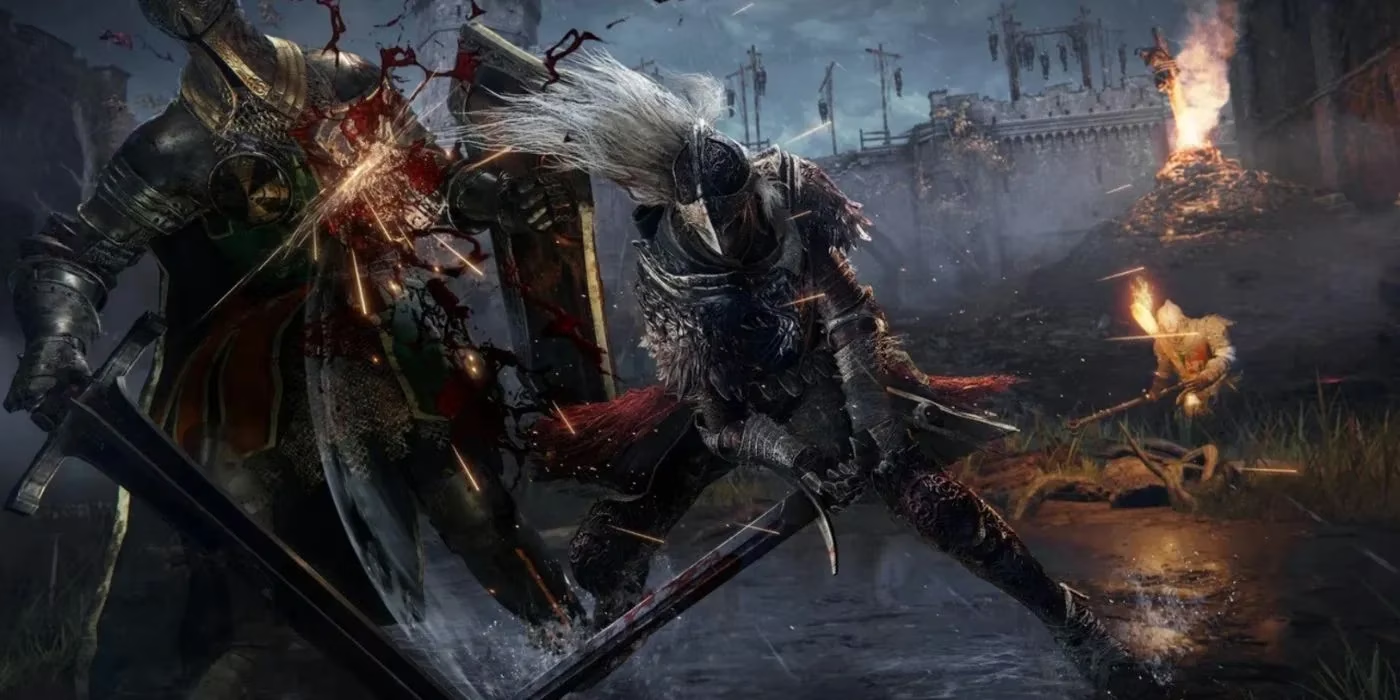
⏳ Game Length: A Deep Novel vs. an Endless Epic
Time is precious in 2026, so here’s the breakdown. Ragnarok’s main story runs 20–30 hours; a completionist dive adds ~15 more, topping at 45ish. Elden Ring’s core path? 50 hours minimum, and that’s skipping the juiciest optional demigods. My own run hit 200+ hours with all the hidden nooks and NG+ cycles. Check this quick table:
| Aspect | God of War Ragnarok | Elden Ring |
|---|---|---|
| Main Story | 20-30 hours | 50+ hours |
| Completionist | ~45 hours | 100+ hours (easily) |
| Replayability | High (story beats, builds) | Staggeringly High (class variety, endings) |
Ragnarok is a deep, well-written novel you can savor in a weekend; Elden Ring is an endless epic you live in for months.
🌟 Final Blurb: Stars of Different Galaxies
In 2026, I still can’t truly crown one winner—they shine in different skies. God of War Ragnarok wraps you in a masterfully acted, cinematic cocoa of Norse tragedy, while Elden Ring throws you into a stormy sea of myth and demands you learn to swim. It all boils down to what moves your soul: intimate narrative or boundless exploration. Both are masterpieces, and honestly, playing them is like owning two priceless, well-thumbed journals from distant epics. ✨