If Elden Ring’s controls felt a little weird the first time you tried to swap grips, you’re definitely not alone. Figuring out how to two hand a weapon in Elden Ring sounds basic, but it matters a lot more than many players expect once bosses start demanding real stagger, better stat efficiency, and cleaner weapon pressure. In this guide, we’re going over the exact inputs on every platform, what two-handing actually changes in combat, which weapon types benefit the most, and what to do if the input just refuses to work. This still matters in 2026, too, whether you’re playing the base game, Shadow of the Erdtree content, or jumping back in on a fresh build.
How to Two Hand a Weapon in Elden Ring
If you just want the fast answer, here it is: hold Triangle and press R1 on PlayStation, or hold Y and press RB on Xbox. That will two-hand your right-hand weapon. You do need to input it properly, though — tapping Triangle or Y by itself won’t do anything, and sloppy timing can make it feel like the game ignored you.
Here’s the full control breakdown:
| Platform | Two-Hand Right Hand | Two-Hand Left Hand |
|---|---|---|
| PlayStation (PS4/PS5) | Hold Triangle + R1 | Hold Triangle + L1 |
| Xbox (One/Series) | Hold Y + RB | Hold Y + LB |
| Keyboard / Mouse (PC default) | Hold E + Left Click | Hold E + Right Click |
On PC, E is the default modifier key. Hold E, then click left mouse to two-hand the weapon in your right slot, or right mouse to grab the left-hand weapon with both hands instead. If you’ve changed your controls, check the Options menu under Controls, since custom layouts — especially on Steam Deck — can shift this around pretty easily.
Two Hand Weapon Controls and Hand Switching
Most of the time, players are two-handing the weapon in their right hand. That’s your usual main weapon setup: your character puts away the off-hand item and switches into the dedicated two-handed stance for that weapon. It’s the standard way to get more out of a sword, hammer, axe, or spear when you want pure offense.
If you want to two-hand the left-hand weapon, the input changes slightly. On PlayStation, it’s Triangle + L1. On Xbox, it’s Y + LB. That’s mainly useful if your left slot has an actual weapon in it rather than a shield, seal, or staff.
Going back to one-handed mode is simple: use the same input again. It’s a toggle, not a separate command. That makes swapping pretty smooth during exploration or boss attempts, since you can move between shield access and two-hand pressure without digging through menus.
A few weapon types behave a bit differently:
-
Bows: You generally need to two-hand them to use them properly, and doing so brings up the expected aiming behavior.
-
Sacred Seals and Staves: These can cast without being two-handed, so the stance isn’t required.
-
Catalysts in general: Two-handing them usually doesn’t give the same practical upside melee weapons get, so it’s more of a convenience choice than a damage one.
Two Handing Benefits in Elden Ring Combat
The big reason players care about two-handing is the 1.5x Strength multiplier. When you hold a weapon in both hands, Elden Ring treats your Strength as 1.5 times higher for requirement checks and physical scaling purposes. So if you have 27 Strength, the game effectively reads that as 40 while two-handing. That’s a huge deal for heavy weapons with steep requirements, because it lets you equip them much earlier than you otherwise could.
That stat boost also helps with damage, but the real highlight in actual fights is often poise damage. Two-handed attacks hit harder against an enemy’s hidden stance meter, which means more staggers and more chances to land critical hits. Against humanoid enemies especially, this can completely change the pace of a fight. Charged heavies and jump attacks push this even further, and with a colossal weapon, a two-handed jump attack can break the stance of many standard enemies almost instantly.
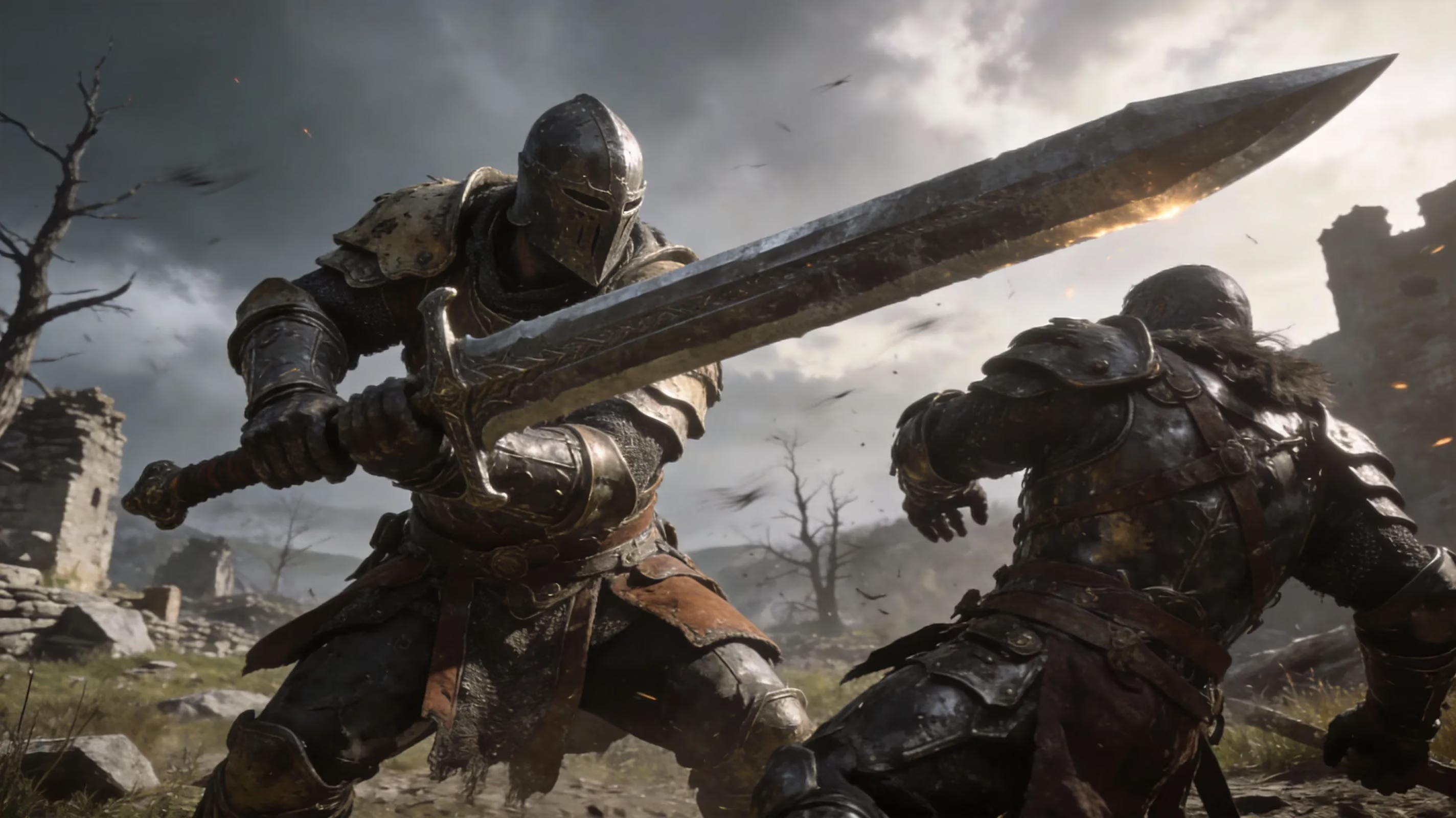
The other major benefit is the moveset itself. A lot of weapons don’t just hit harder when two-handed — they attack differently. Some gain wider sweeps, others get more committed overheads, and a few simply feel way smoother in that stance. The downside is pretty straightforward:
-
You lose shield blocking while two-handing.
-
You can’t use left-hand weapon skills or shield skills in that state.
-
If your build depends on parry, guard counters, or quick catalyst access, you’ll need to toggle back.
Best Weapons and Builds for Two Handing
Not every weapon class gets the same value from two-handing. Some absolutely thrive on it, while others only gain a small edge.
| Weapon Class | Two-Hand Benefit | Best Use Case |
|---|---|---|
| Colossal Swords / Greathammers | Maximum poise damage, stance-break | Strength builds, stagger-focused PvE |
| Greatswords | High damage, manageable speed | Versatile STR/DEX hybrid builds |
| Katanas | Moveset fluidity, bleed buildup | DEX/ARC builds, PvP pressure |
| Spears / Lances | Reach retention, thrust damage | Mounted combat, spacing control |
| Sacred Seals / Staves | Marginal benefit | Situational off-hand swap |
Colossal Swords and Greathammers
If your goal is raw stagger and massive hit impact, colossal swords and greathammers are where two-handing really shines. Weapons like the Greatsword, Starscourge Greatsword, and Giant-Crusher get a serious boost from the Strength multiplier, and that can let you bring them online way earlier than their listed requirements suggest. For Strength builds, that’s a massive advantage during early and mid-game progression.
Their two-handed movesets are also just better suited to heavy pressure. You’ll often get wider horizontal swings, heavier slams, and attack patterns that feel built for breaking enemy posture. Jump attacks with colossal weapons remain some of the best stance-breaking tools in the game, which is exactly why they’re so popular in PvE.
Greatswords, Katanas, and Spears
Greatswords sit in a really comfortable middle ground. They still hit hard, but they’re much easier to manage than colossal weapons, and two-handing them often improves the flow of their moveset. The Claymore and Bastard Sword are good examples, especially for STR/DEX builds that want solid reach without going all-in on ultra-heavy gear.
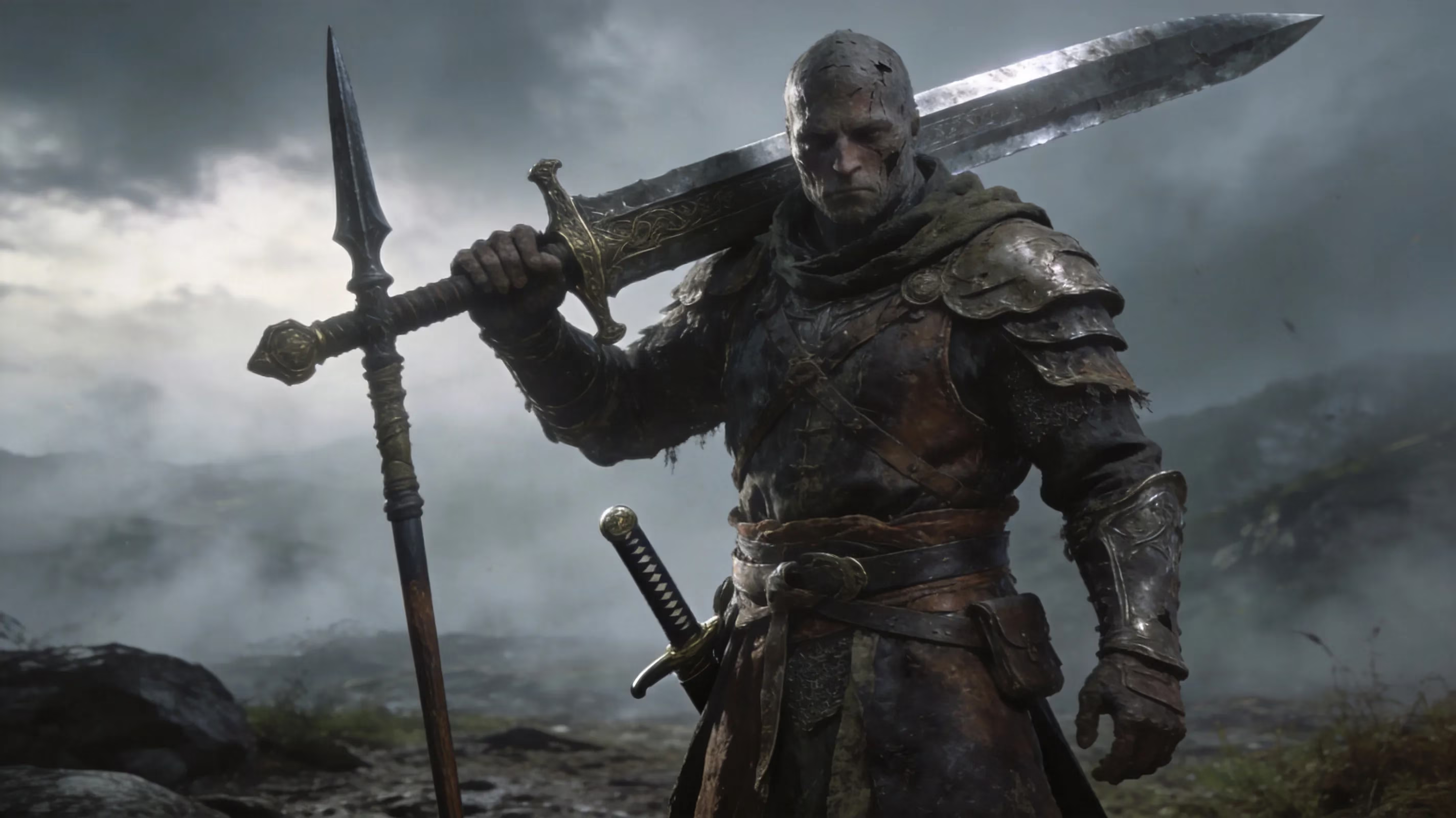
Katanas also feel great in two hands. The stance tends to make their attacks feel more committed and fluid, and that works nicely with bleed-focused setups. Moonveil and Rivers of Blood can still perform very well this way, especially since their key Ash of War value comes from the right-hand weapon anyway.
Spears and lances are a little different, but still strong. Their biggest advantage is reach, and two-handing doesn’t take that away. In mounted combat on Torrent, that spacing can be incredibly useful, particularly in open-world boss fights where keeping distance matters more than blocking.
Faith and Intelligence Catalysts
Sacred Seals and Glintstone Staves are the least exciting category for two-handing. Since their scaling comes from Faith or Intelligence, the Strength multiplier doesn’t help their casting output. So from a pure numbers standpoint, there usually isn’t much reason to do it.
That said, there are still niche cases where it makes sense. If your build is centered entirely around casting and you aren’t using the off-hand for anything important, two-handing a seal or staff can simply make the setup feel cleaner. It’s more about convenience than optimization, but sometimes that’s enough.
How to Two Hand a Weapon in Elden Ring Without Issues
Even after hundreds of hours, some players still run into moments where how to two hand a weapon in Elden Ring suddenly feels inconsistent. Usually, the problem is input timing. You need to hold the modifier first — Triangle, Y, or E — and then press the weapon button. If you mash both at once, the game may not register it the way you expect.
Another common issue is grabbing the wrong hand. It happens all the time. You mean to two-hand your main weapon, but instead your character grabs the shield, seal, or off-hand weapon because you used the left-hand version of the input. If something feels off, check your equipped slots before assuming the controls are bugged.
There’s also some confusion around skills and Ashes of War. When you two-hand your main weapon, you lose access to whatever skill was attached to the left-hand item. So if you were expecting a parry, shield skill, or off-hand catalyst function, it won’t be available until you switch back. That’s not a bug — just how the stance works.
For PC players, it’s worth checking whether another app, overlay, or launcher is intercepting the E key. That can quietly break the input. On Steam Deck, custom controller mappings can also cause overlap issues, especially in desktop mode. If that’s happening, remapping the input through Steam Input or assigning it to a back paddle usually fixes it fast.
Elden Ring Two Hand FAQ
What is the difference between two-handing and dual wielding (powerstancing)?
Two-handing means using one weapon with both hands. You get the Strength multiplier and a different moveset. Dual wielding, or powerstancing, is something else entirely — that requires two weapons of the same class equipped in both hands, and it unlocks a special paired attack chain through the left-hand attack input.
How does the Strength requirement math work?
Take your base Strength and multiply it by 1.5, then round down. So 27 Strength becomes 40 while two-handing. If a weapon’s Strength requirement is at or below that number, you can use it without the usual penalty.
Can players parry while two-handing?
Not normally. Parrying needs a parry-capable shield or tool in the left hand, and two-handing removes access to that slot. If your setup depends on parries, you’ll want to stay one-handed.
What are the best early-game weapons for two-handing?
For DEX players, the Reduvia and Uchigatana are both strong early options and feel good in a two-handed stance. For Strength builds, the Greatsword in Caelid is the standout pick, since the 1.5x Strength rule lets you use it much earlier than its 31 Strength requirement would suggest. The Club and Battle Axe from early merchants are also solid budget choices and honestly do more work than people expect.
Conclusion
The input itself is quick — hold Triangle/Y/E, then press the matching weapon button — but the payoff is huge. Two-handing lets you meet Strength requirements earlier, deal better poise damage, and unlock movesets that are often way more effective than their one-handed versions. Heavy Strength builds get the most obvious value from it, but DEX, quality, and even some caster setups can still benefit in the right situations. Once you get comfortable toggling grips on the fly, combat in the Lands Between starts feeling a lot smoother. Good luck out there, Tarnished.