The embargo on reviews for Elden Ring Nightreign lifted recently, sparking widespread discussion among the gaming community even before the game's official release. Based on critics' early impressions, Nightreign has garnered an average score of 80 on OpenCritic, a respectable figure but notably lower than the stellar 95 for the original Elden Ring and the 94 for Shadow of the Erdtree. This mixed reception highlights the experimental nature of the title, with many reviewers pointing to significant balance issues and heightened difficulty as key concerns. As a professional gamer, I find this initial buzz both exhilarating and nerve-wracking; the thrill of diving into FromSoftware's latest creation is palpable, but the reports of unforgiving gameplay evoke a sense of trepidation, especially for solo adventurers like myself who cherish the challenge yet fear potential frustration. 🎮
The critical consensus reveals that Nightreign's unbalanced design forces players into highly optimized runs to guarantee success, stripping away some of the spontaneous joy that defines the Soulslike genre. Reviewers universally acknowledge that bosses are tailored for co-op play with three players, making solo encounters feel like navigating a labyrinth in pitch darkness—a rare but apt metaphor that captures the isolating intensity. 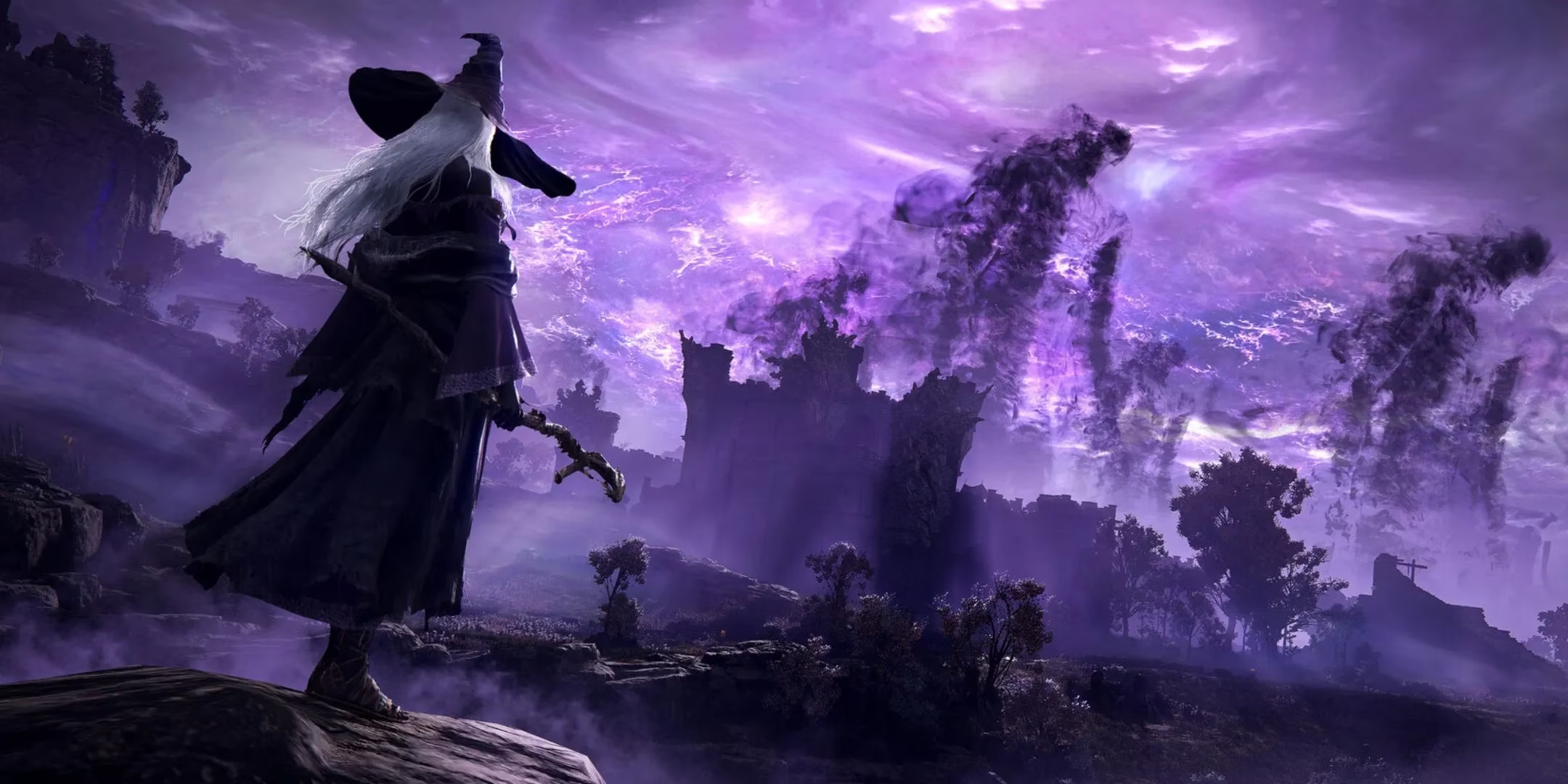 This image of mystical combat underscores the game's breathtaking visuals, yet the underlying mechanics can be as elusive as catching smoke with bare hands. Adding to the complexity, the difficulty isn't just about skill; it's a deliberate design choice that has divided the community. Some purists argue it's all a "skill issue," but even seasoned Souls-focused creators express concerns, suggesting the challenge might alienate newcomers. Personally, I resonate with this tension; overcoming such hurdles feels rewarding, yet the sheer steepness reminds me of scaling an ice-covered mountain peak without gear—an exhilarating but precarious endeavor. ⚔️
In response to these criticisms, FromSoftware swiftly released Patch 1.01, demonstrating their commitment to refining Nightreign. The patch notes detail several adjustments aimed at enhancing gameplay without compromising the core experience. Key changes include:
-
Balance adjustments: Tweaks to enemy difficulty and player mechanics to foster fairer encounters.
-
Improved handling of player characters: Smoother controls for more intuitive combat.
-
Soundtrack addition and adjustments: Enhanced audio immersion.
-
Text adjustments: Clearer in-game guidance.
-
Added character scenarios: New story elements to enrich the narrative.
-
Bug fixes: Addressing technical glitches for a smoother run.
While specifics remain shrouded in mystery—typical of FromSoftware—the studio likely eased some aspects rather than increasing the difficulty. 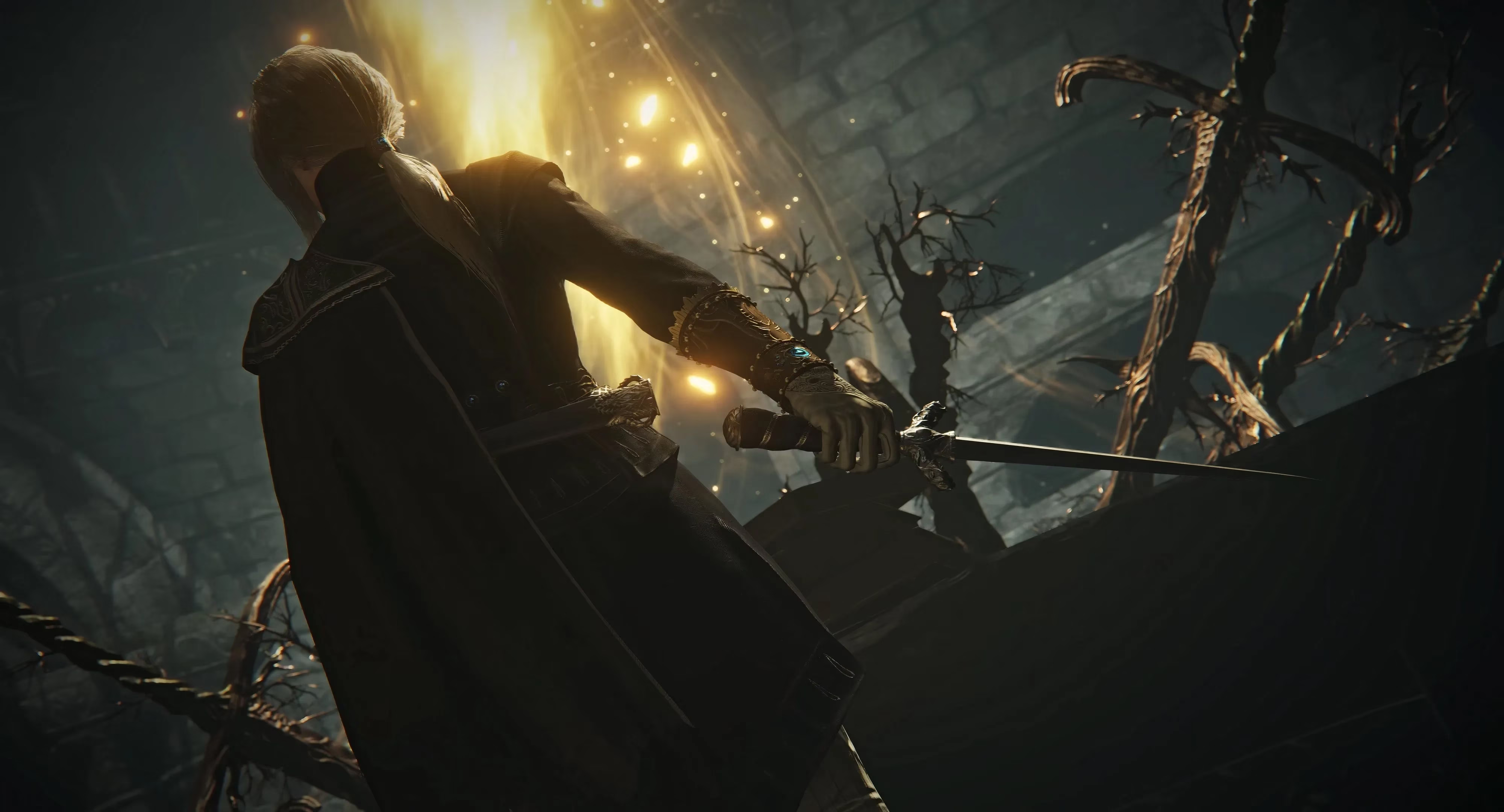 This visual of the Duchess in her domain symbolizes the game's rich lore, but the patch's impact on solo play is akin to finding a steady handhold on a crumbling cliff face—unexpectedly stabilizing. As a player, I appreciate these updates; they promise to make victories more attainable while preserving that signature Soulslike tension. James Lucas, in his glowing 4.5/5 review, captured this sentiment perfectly, describing the loop as "unbelievably satisfying" where moments of triumph shine like rare gems in a vast desert. His enthusiasm mirrors my own anticipation, yet the lingering balance debates feel like a chess match with invisible pieces—strategic but often disorienting.
Elden Ring Nightreign is set to launch on May 30, 2025, for PC, Xbox Series X/S, and PlayStation 5, bringing this experimental journey to eager fans. As the initial wave of reviews continues to shape expectations, the game's evolution through patches offers hope for a more accessible experience. This discussion circle back to the opening revelation; what began as a flurry of critical opinions has matured into a nuanced dialogue about challenge and refinement, proving that even in the harsh world of Limveld, the quest for balance remains as enduring as the cycle of day and night.