Ask ten Souls players is elden ring harder, and you'll probably get ten slightly different answers. That's not a dodge; it's just how Elden Ring works. It's arguably FromSoftware's easiest game to get into because the open world lets you leave, level, and come back stronger, but it also contains some of the nastiest fights the studio has ever made if you push into optional bosses, the DLC, or higher New Game Plus cycles. The base game, Shadow of the Erdtree, and NG+ all hit differently, so the real answer depends a lot on how you choose to play.
Is Elden Ring Harder Than Other Souls Games
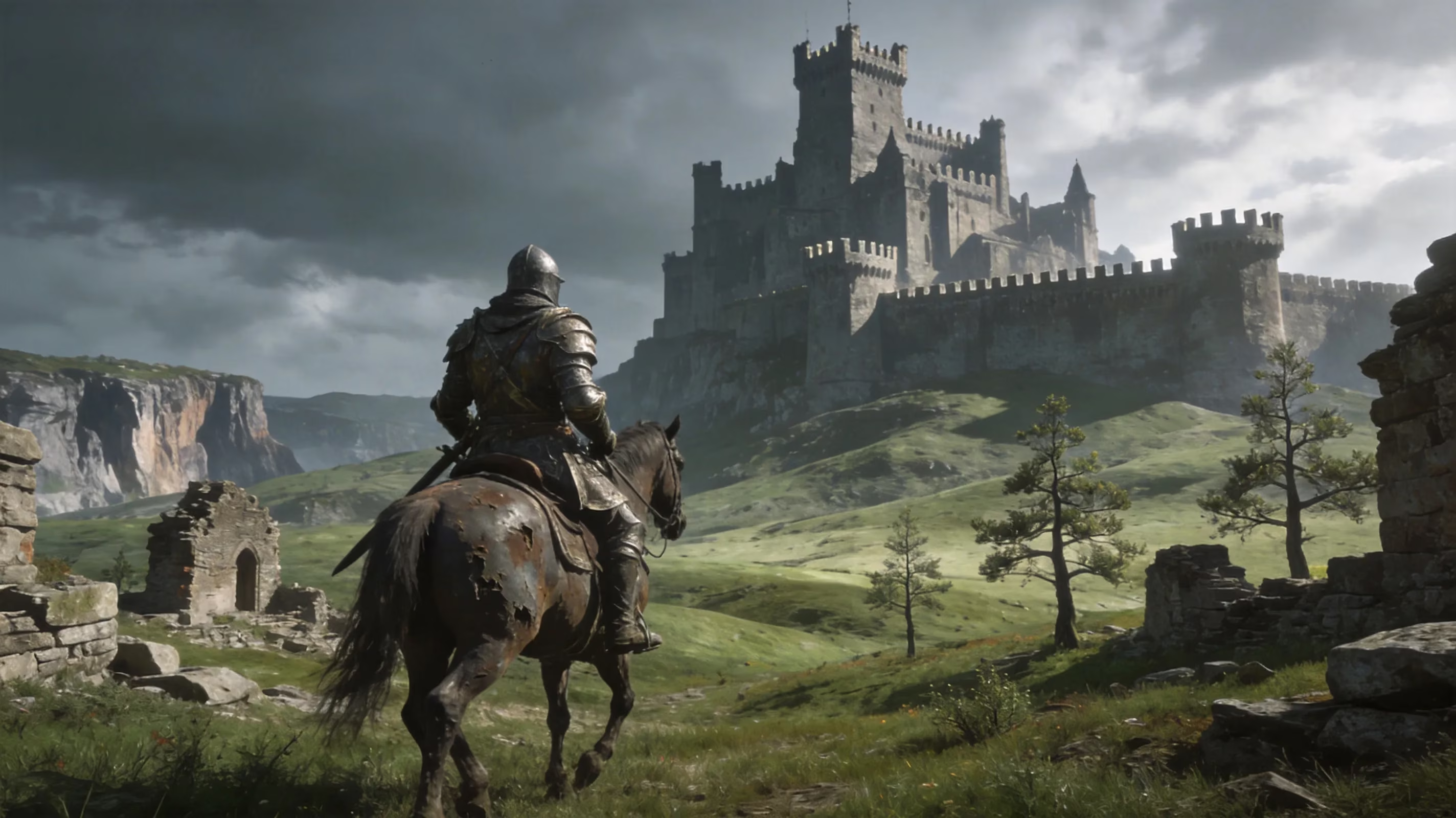
Compared to older FromSoftware games, Elden Ring doesn't fit into a simple "harder" or "easier" box. If you're asking whether is elden ring harder than Dark Souls 1 or Dark Souls 3 in pure gameplay terms, the honest answer is: sometimes. Dark Souls 1 leans more on careful progression and map knowledge, while Dark Souls 3 pushes faster bosses and tighter combat pressure. Elden Ring does something those games usually don't let you do — it gives you room to walk away. You can skip Stormveil for a while, farm in Limgrave, or take the cliffside route and avoid a roadblock entirely.
That freedom matters a lot. In older Souls games, if a boss stopped you, that was the game. In Elden Ring, a boss stopping you often just means you should go somewhere else for two hours, grab upgrade materials, come back ten levels later, and flatten it.
Sekiro is a different conversation. Since Sekiro strips away build variety and summons, you can't really out-route or out-build its skill checks. You either learn the deflect rhythm or you don't. Bloodborne is similar in its own way: it wants aggression, it punishes hesitation, and it gives you far fewer ways to brute-force bad habits than Elden Ring does.
That's why the 2026 consensus has settled into a pretty clear middle position. Elden Ring is the most newcomer-friendly FromSoftware game overall, but it also includes some of the hardest individual encounters the studio has ever shipped. The floor is lower because of Spirit Ashes, co-op, and build freedom. The ceiling, thanks to fights like Malenia and the Shadow of the Erdtree final boss, is extremely high.
| Title | Overall Difficulty | Build Flexibility | Bypassing Difficulty |
|---|---|---|---|
| Dark Souls 1 | Moderate | Moderate | Low |
| Dark Souls 3 | High | Moderate | Low |
| Bloodborne | High | Low | Very Low |
| Sekiro | Very High | None | None |
| Elden Ring (Base) | Moderate–High | Very High | High |
| Elden Ring + DLC | Very High | Very High | Moderate |
Why Elden Ring Feels Harder
A big reason Elden Ring feels harder than expected, even for Souls veterans, is boss timing. FromSoftware got really mean with delayed attacks here. A lot of bosses hold their swings just long enough to catch players rolling on instinct, especially if that instinct was built in Dark Souls or Bloodborne. Godrick, Maliketh, and especially Malenia all punish panic rolls in ways that can feel brutal until the rhythm finally clicks.
Then there's the Vigor tax, which is very real. If you spread your levels too evenly and ignore Vigor, the game starts deleting you in two or three hits by the midgame. Elden Ring never fully stops you from making a glass-cannon build too early, and that freedom is great until you hit Altus Plateau or the Mountaintops of the Giants and realize your damage is fine but your survivability is awful. The soft caps at 40 and 60 Vigor matter way more than many first-time players expect.
The open world also creates its own kind of punishment. In a linear Souls game, the game usually controls when you meet danger spikes. Elden Ring doesn't. You can wander into Caelid at level 15, get teleported from Dragon-Burnt Ruins into Sellia Crystal Tunnel, or stumble toward Radahn way before you're ready. Those moments are rough, but they're also part of the game teaching you that the map has its own difficulty geography, and curiosity sometimes gets you killed.
Shadow of the Erdtree pushed this even further. The DLC introduced the sharpest difficulty spike in the game through the Scadutree Blessing system, which means your base-game level alone doesn't carry you. If you enter the Land of Shadow without enough Scadutree Fragments, you feel underpowered immediately. Messmer the Impaler and the DLC's final boss forced a lot of experienced players to tighten up their dodge timing, stamina use, and build choices, and that's a big reason the DLC sparked so much debate about whether the challenge was still fair.
Is Elden Ring Harder by Playstyle
This is where the whole discussion gets more practical. Is elden ring harder? Yes, no, and very much depending on what tools you allow yourself to use. Two players can technically be playing the same game and have wildly different difficulty curves.
Solo No-Summon Runs
If you play solo with no Spirit Ashes and no co-op, Elden Ring gets much harsher. Boss aggro stays on you almost nonstop, so there's no breathing room created by a summon eating hits or pulling attention. Every opening has to be earned. Every heal has to be timed. Every greedy extra swing is more likely to get punished.
That makes stamina management and spacing way more important than many players realize at first. You're not just learning attack patterns; you're learning how long you can safely stay in range, when to disengage, and when to hold your ground. On this setting, so to speak, Elden Ring starts to feel closer to Sekiro in how much it demands clean execution and pattern recognition.
Some late-game bosses also feel clearly tuned around the assumption that many players will bring help. Malenia is the obvious example. Waterfowl Dance is bad enough already, but with no second target to split her attention, the pressure becomes relentless. Her life-steal passive is also much nastier when every hit she lands is on you.
Summons And Strong Builds
On the other hand, summons can change the game dramatically. Mimic Tear is the headline example for a reason. Since it copies your equipment and scales with your build, a +10 Mimic Tear can turn a hard boss into a much more manageable two-on-one. It adds damage, splits aggro, and gives you room to heal or reset positioning. That's enormous value.
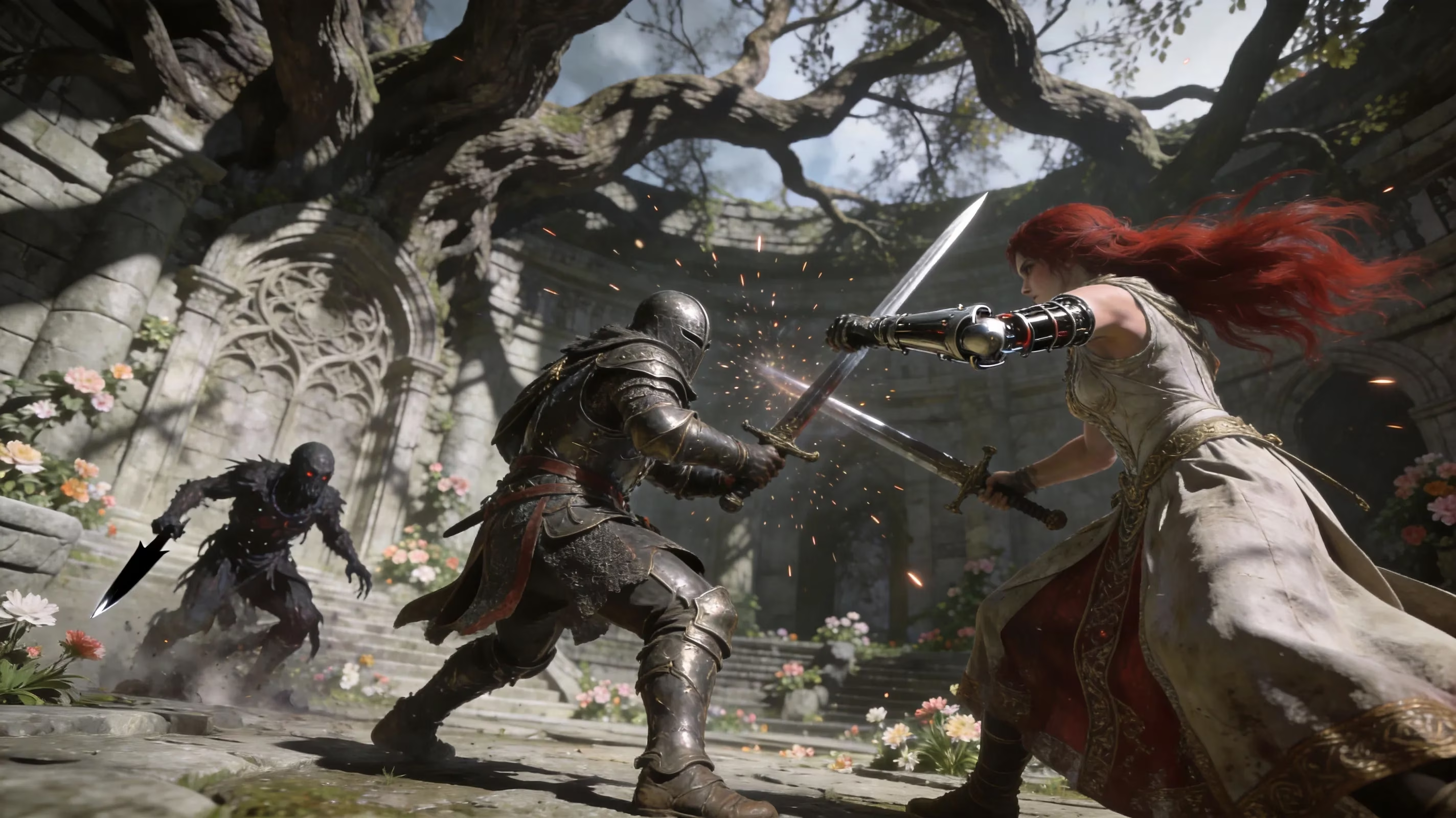
Strong builds matter just as much. Bleed setups built around Rivers of Blood, Occult Scavenger Curved Swords with Seppuku, or Ghiza's Wheel can melt a huge number of enemies and bosses that aren't resistant to Hemorrhage. Stance-break setups do something similar in a different way. Colossal weapons, charged heavies, and certain weapon arts stack poise damage fast enough to interrupt bosses before their most dangerous sequences really get going.
Patch history matters here too. FromSoftware has toned down some of the worst offenders over time — Mimic Tear got hit in patch 1.04, and Rivers of Blood has been adjusted more than once — but in the 2026 patch environment, meta builds still make a massive difference. If you optimize on purpose, Elden Ring becomes far more forgiving than its reputation suggests.
New Game Plus shifts the conversation again. Enemy health and damage keep scaling through NG+7, so the numbers get nastier, but you also enter with knowledge, gear, and a finished build. For a lot of players, NG+ is hard in a satisfying way because it tests what you've learned rather than blindsiding you with something new.
Is Elden Ring Harder Early Or Late Game
Elden Ring's difficulty curve is not smooth. That catches a lot of people off guard.
Early on, the biggest wall is usually Margit the Fell Omen. He's the game's first real skill check, and honestly, he's a very effective one. His delayed swings, long combos, and Holy extensions punish players who rush straight from the tutorial to Stormveil without exploring. If you fight him immediately, he can feel absurd. If you clear most of Limgrave first, hit around level 25–30, and bring a weapon upgraded to at least +3, he's still tough but much more reasonable.
Later, the game spikes again at the Mountaintops of the Giants. This is where enemy aggression, health, and damage all jump hard enough that shaky builds start getting exposed. Players who cruised through earlier zones with bleed or summon support often notice for the first time that their fundamentals aren't as solid as they thought.
Still, the absolute peak fights are mostly optional. Malenia, Blade of Miquella, remains one of the hardest bosses FromSoftware has ever designed. Waterfowl Dance alone can end attempts unless you have the dodge timing down or a greatshield setup ready. Her healing on hit punishes sloppy summon use, and phase two adds scarlet rot area pressure on top of everything else. The fact that only about 31.7% of PlayStation 5 players had beaten her based on available trophy data says a lot.
Then the DLC raised the bar again. The Shadow of the Erdtree final boss became the new benchmark and sparked enough backlash that FromSoftware eventually adjusted the fight in a post-launch patch. Messmer the Impaler, meanwhile, landed in that sweet spot where the fight is clearly brutal but still feels like a payoff for everything the base game has been teaching you.
How To Make Elden Ring Less Hard
If Elden Ring is beating you down more than you're enjoying it, there are a few fixes that help immediately.
First, level Vigor early. This is the best advice in the game, and it stays true for almost every beginner. Getting to 40 Vigor as soon as you reasonably can gives you way more room to survive mistakes, learn patterns, and avoid random-feeling one-shots. Going to 60 later is still good, but 40 is the big early breakpoint.
Second, prioritize weapon upgrades over damage stats in the early and midgame. A +6 standard weapon or +3 somber weapon at level 30 will usually outperform a much higher-level character still swinging an under-upgraded weapon. Smithing Stones do a ton of work. If you're struggling, mines are often more valuable than another hour of rune farming.
For starting classes, three stand out:
-
Vagabond: Safest beginner pick thanks to high starting Vigor, solid armor, and a 100% physical block shield
-
Samurai: Best early damage profile, with the Uchigatana carrying real value well into the game
-
Astrologer: Great if you want ranged pressure through spells like Glintstone Pebble and Rock Sling
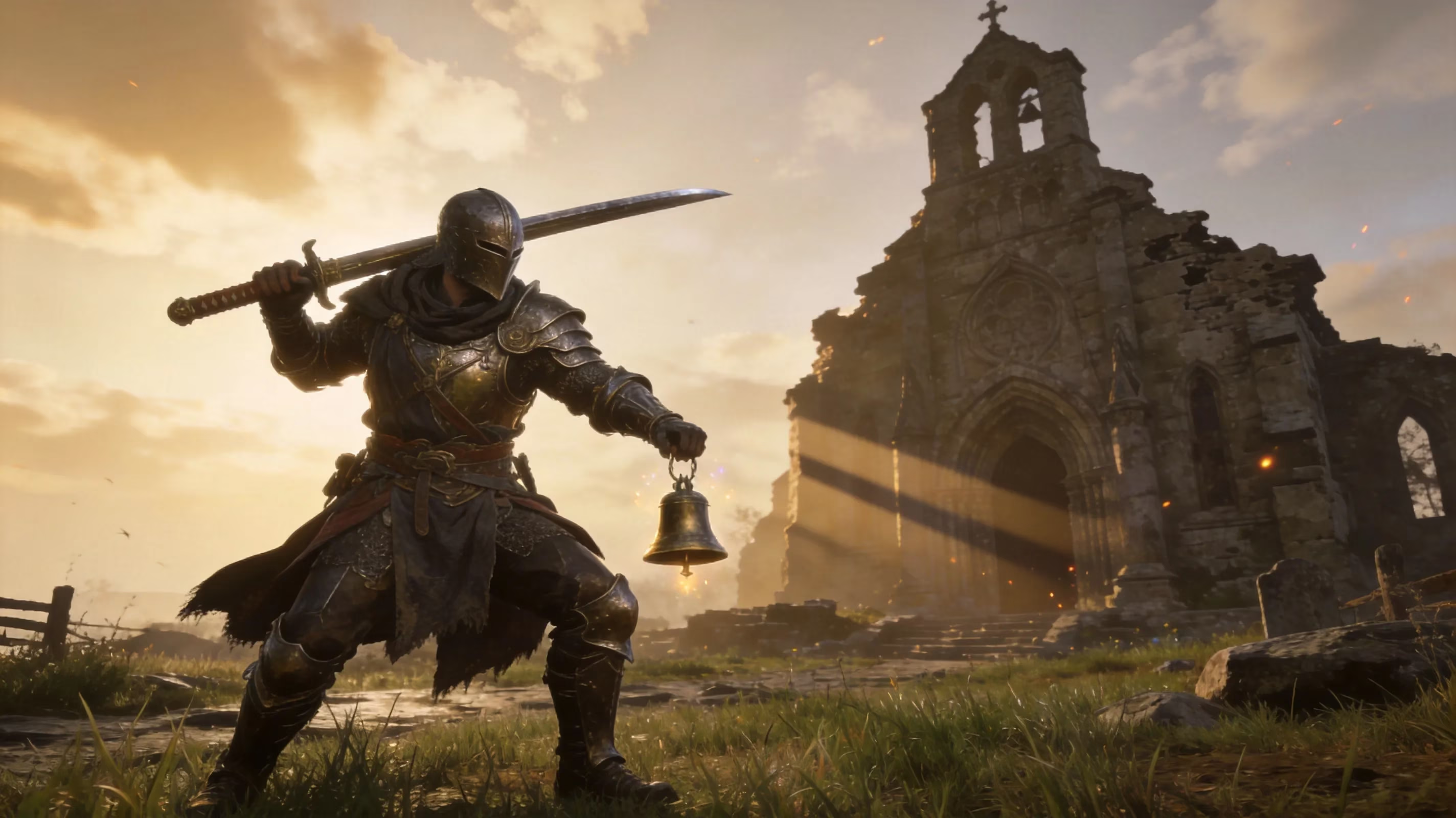
You should also grab the Spirit Calling Bell from Renna at the Church of Elleh as early as possible. Even basic summons help by splitting aggro, and once you start upgrading Spirit Ashes with Grave Glovewort through Roderika at Roundtable Hold, they become much more than a distraction. The Lone Wolf Ashes are especially useful early because three bodies on the field force bosses to divide attention.
Route order makes a huge difference too. A simple beginner-friendly path looks like this:
-
Clear most of Limgrave
-
Finish the Weeping Peninsula
-
Upgrade your weapon
-
Return to Margit and Stormveil
-
Explore Liurnia before pushing into Caelid
That route gives you more runes, more upgrade materials, and more practice without slamming you into one of the game's nastier difficulty spikes too early. Elden Ring really does reward lateral exploration more than stubborn forward progress.
Elden Ring Difficulty FAQ
Is Elden Ring too hard? For most players, it's hard but very beatable. Steam data suggests around 50% of players have finished the game at least once, which is a strong completion rate for a game in this genre. Getting stuck on Margit or another early boss is normal. The important part is that Elden Ring gives you tools — summons, open-world detours, respec options, strong builds — to work around those walls.
Does dying make Elden Ring harder? No. Enemy stats and AI do not scale up because you died a lot. What dying does do is create indirect pressure. You can lose Runes, burn through consumables, and start making worse decisions out of frustration. So the game feels harder after a bad streak, but it isn't secretly increasing the difficulty behind the scenes. Your lost Runes can always be recovered from the death spot on the next run.
Can the average player beat Elden Ring? Yes. More than earlier Souls games, Elden Ring is built to let determined players find their own solution. The open world, Spirit Ashes, and build flexibility all lower the barrier to finishing the main game. Optional content is another story. Malenia, the Haligtree, and the Shadow of the Erdtree final boss are much more demanding and naturally filter out a bigger chunk of the player base.
What is the best start for beginners? Vagabond is still the safest recommendation. Pair that with an early push to 40 Vigor, get the Spirit Calling Bell and Lone Wolf Ashes quickly, and fully explore Limgrave before taking Margit seriously. Upgrading your starting weapon to +3 using Smithing Stones from Limgrave Tunnels and Stormfoot Catacombs helps a lot, and buying Margit's Shackle from Patches in Murkwater Cave makes the first major wall much less punishing by pinning him down twice per fight.
Conclusion
So, is elden ring harder? It is, but only in certain ways. A blind solo melee run through late-game areas, the Haligtree, and Shadow of the Erdtree is absolutely one of the toughest action RPG experiences out there. The exact same game with Spirit Ashes, co-op, and a tuned meta build is much more manageable. That's really the key point: Elden Ring has a lower floor than older FromSoftware games, but a much higher optional ceiling.
That balance is a big part of why the game works. It's punishing, sometimes brutally so, but it usually gives you a way forward if you're willing to adjust. If you're just starting, the best approach is still simple: explore sideways, level survivability early, upgrade your weapon before chasing damage stats, and don't feel bad about summoning. Good luck out there, Tarnished.