I stand before them, controller slick with sweat, my virtual avatar a mere pixel against their grandeur. They speak, and I listen—even when I'm hearing those same words for the twentieth time. It's a strange intimacy, this dance of death and dialogue. Their taunts become a twisted lullaby, their monologues the scripture of my repeated failures. Yet, within that cycle of frustration, something beautiful and indelible is forged. These aren't just lines of code; they're declarations of identity, final gasps of philosophy before the clash of steel and spell. They are the moments that transform a challenge into a memory, a boss into a legend.
🍻 The God of Thunder's Grievance
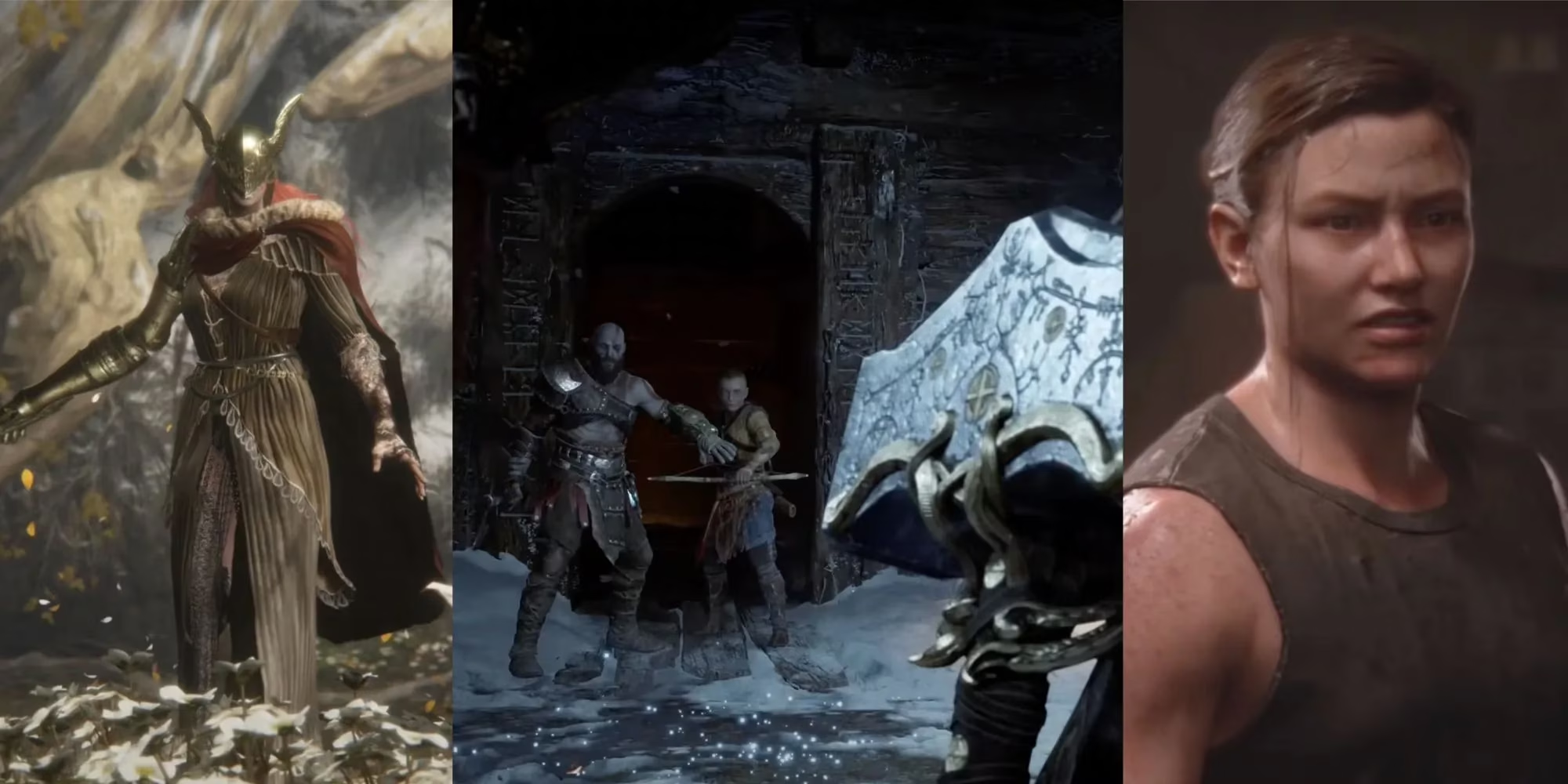
It began with a drink. Can you believe it? One moment, I'm sharing mead in my own home, the next, I'm trading world-ending blows with a deity nursing a grudge. Thor in God of War: Ragnarök doesn't just fight; he narrates his pain. Each earth-shattering punch from Mjölnir is accompanied by a verbal jab, a dedication to a son lost, a life shattered by my past choices. The dialogue weaves through the combat like a serpent, making the battle feel less like a game and more like the climax of a mythic saga I'm living inside. It’s cinema, plain and simple.
⚔️ The Scarlet Valkyrie's Mantra
Then there is her. In the rotting heart of the Haligtree, a goddess of rot awaits. "I am Malenia. Blade of Miquella." The words are a chill down the spine, a promise of pain. By the time you hear "And I have never known defeat," you already know it's a lie you're about to make true, but oh, the cost. Hearing it again on that hundredth attempt... it stops being annoying and starts being a prayer. My own personal "git gud" chant. And when she rises, reborn as the Scarlet Aeonia, whispering of being the "true horror," the dialogue completes her transformation from warrior to calamity. You're not just fighting a boss; you're fighting a statement.
| Boss | Game | The Line That Sticks |
|---|---|---|
| Thor | God of War: Ragnarök | Taunts woven into combat, a saga of grief |
| Malenia | Elden Ring | "I am Malenia. Blade of Miquella." |
| The Master | Fallout | A battle fought almost entirely with words |
🎭 The Theater of Hatred
Some dialogues aren't boasts; they're raw, human wounds laid bare. The confrontation between Ellie and Abby in The Last of Us Part II is a masterclass in this. In that abandoned theater, the air is thick with more than dust—it's heavy with every life taken, every friend lost. Their short, sharp exchange before the violence isn't a taunt; it's an accounting. A horrific settling of scores where the numbers never add up. As they stalk each other, the silence between their labored breaths speaks volumes. The dialogue happened before the fight; the fight itself is just the period at the end of a very long, very bloody sentence.
🏹 "I Kneel to No One!"
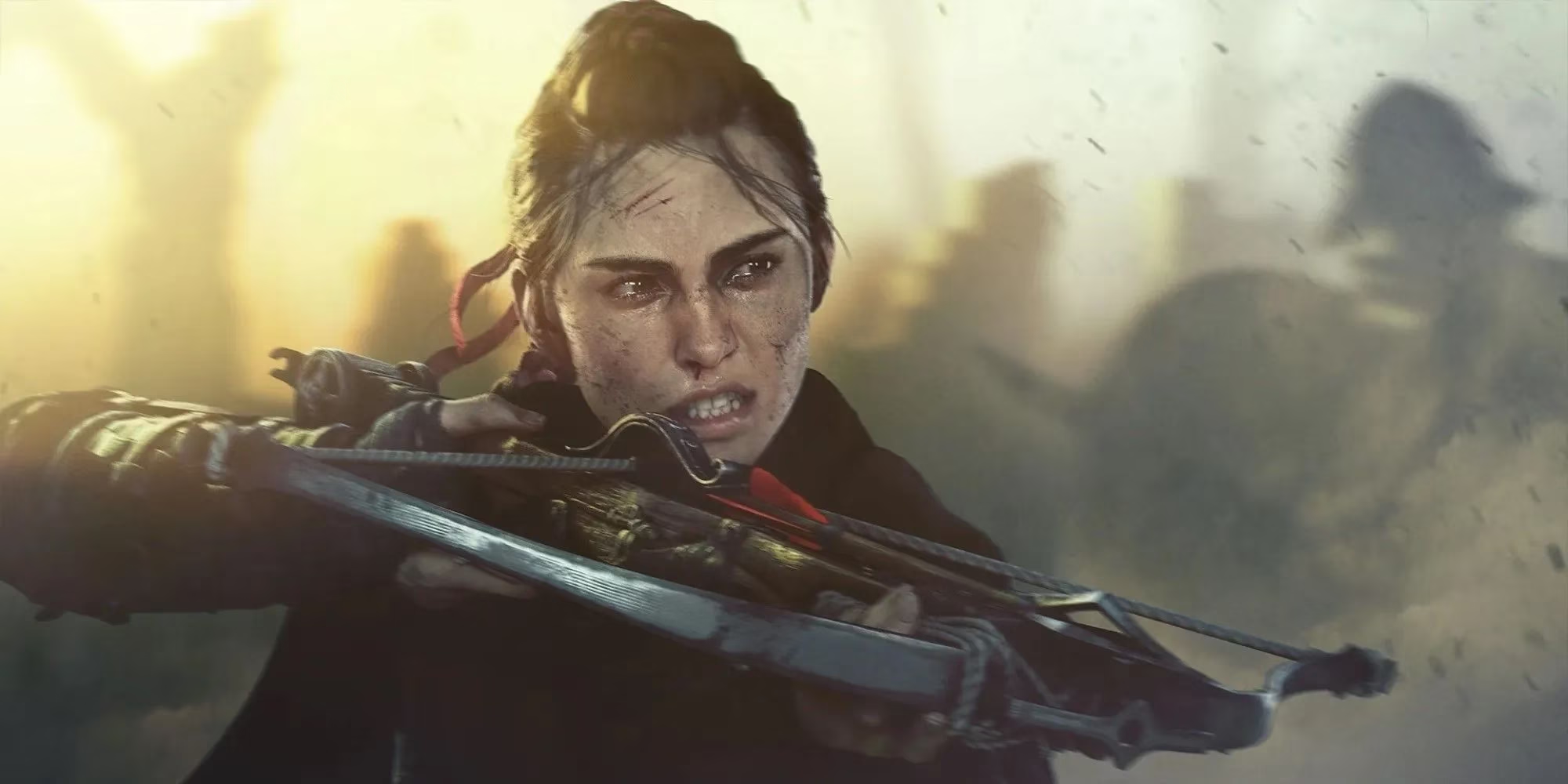
Amicia de Rune taught me about resilience. Beaten, betrayed, and cornered by the vile Count Victor, she should break. The game wants you to feel her despair. But then, from the mud and the pain, she rises. "I am Amicia De Rune, and I kneel to no one!" It’s not a cool one-liner; it’s a guttural roar of defiance from a character who has nothing left but her will. In that moment, the dialogue isn't the boss's—it's mine. It's the player's spirit, given voice by a character who refuses to be a victim. It gives you the strength to pick up the crossbow one more time.
🧛♀️ The Chase Is On
Other times, the dialogue is the threat itself. Lady Dimitrescu doesn't just want to kill you; she wants you to know exactly what she's going to do and how much she'll enjoy it. Being hunted through that gothic mansion while her velvety threats echo down the hallways... wow, talk about ambiance. Her dialogue turns the environment into a character. Every creak of a floorboard is punctuated by her promise of vengeance for her "daughters." It's terrifying, sure, but also weirdly thrilling. You're not just running from a boss; you're running from a conversation you desperately don't want to finish.
🎯 "Would You Kindly?"
And then there are the dialogues that change everything. Andrew Ryan's golf club monologue in BioShock isn't a boss fight; it's a philosophical dismantling. He's not even attacking you physically. He's attacking your agency, your very understanding of the game world and your place in it. The reveal of "Would you kindly?" is a seismic shift. The dialogue is the battle, and you've already lost it a dozen times over without knowing. Beating him afterward feels almost trivial. The real victory was surviving the truth in his words.
-
The Personal Vendetta: Lara Croft's desperate, pistol-whipped "Where. Is. My. MOTHER?!" in Tomb Raider: Legend. It’s pure, unfiltered emotion.
-
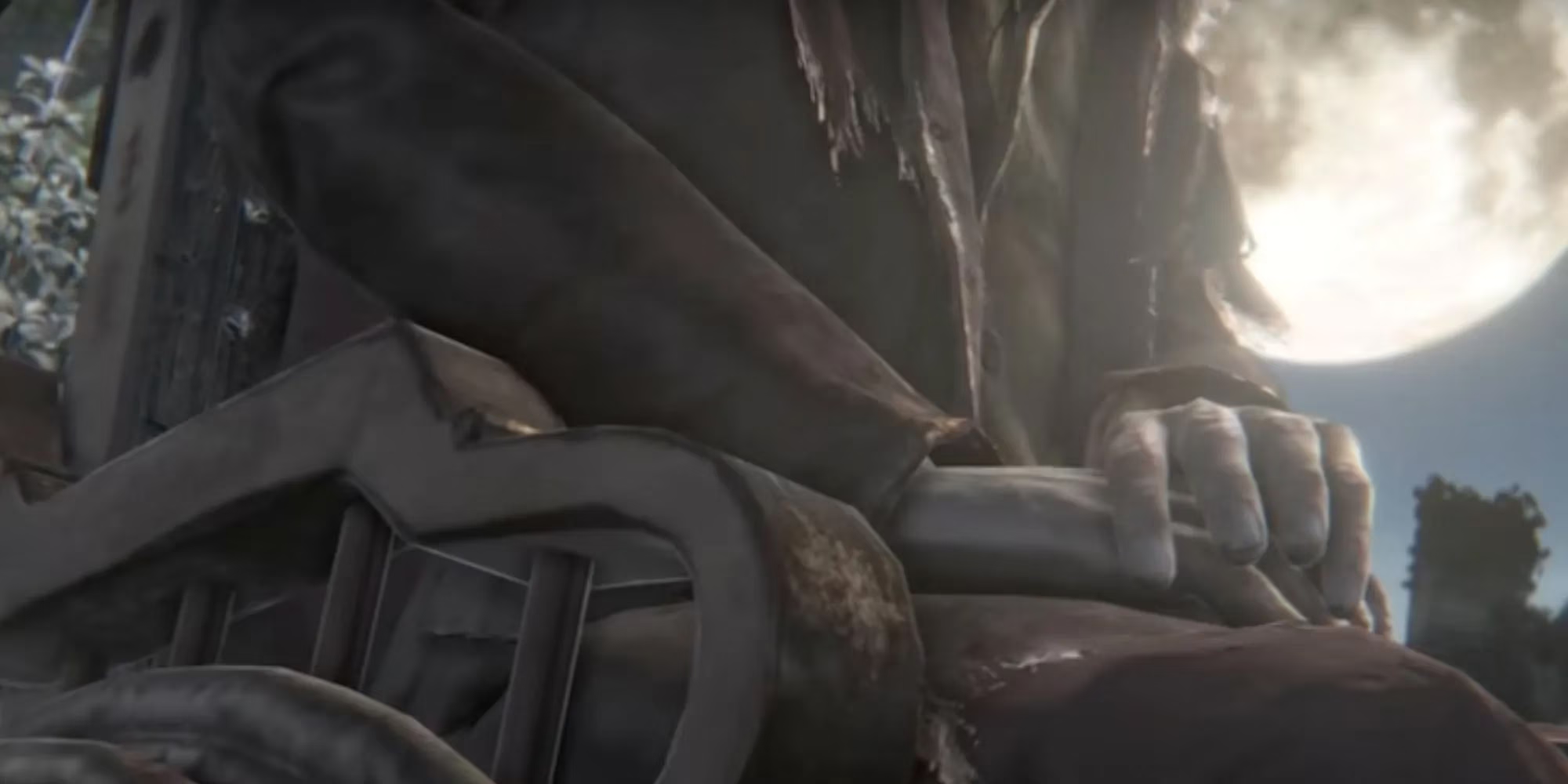
The Invitation to the Dance: Gehrman's sorrowful "Tonight, Gehrman joins the hunt." It’s less a threat and more a melancholic ceremony.
-
The Gloriously Cheesy Threat: Magneto's 1992 classic, "X-Men, welcome to die!" So bad it's legendary. You gotta love it.
-
The Logical Fallacy: Arguing a super mutant into oblivion in Fallout. Proving that sometimes, the mightiest weapon is a good counter-argument.
In the end, these voices linger long after the credits roll. They are the punctuation marks in our gaming stories. The ellipsis of a looming threat, the exclamation point of a defiant stand, the question mark that unravels our reality. We may curse them through gritted teeth on that umpteenth attempt, but we also quote them, remember them, and carry them with us. They are the proof that in these digital arenas, we're not just fighting for victory. We're fighting for a story. And the best bosses are the ones who understand that a great story needs a great voice.
So, let them talk. I'll be here, ready to listen... and then ready to hit restart. One more time. For the story.