If you're wondering what does dex do in Elden Ring, the short version is pretty simple: Dexterity boosts the damage of DEX-scaling weapons, speeds up sorceries and incantations, slightly reduces fall damage in a few situations, and makes certain Torrent actions a bit quicker. What it does not do, despite how often this still gets repeated, is make your melee swings faster. That catches a lot of newer players off guard, especially if they come in expecting a classic “agility = faster attacks” setup. In this guide, we’re breaking down the real mechanical impact of DEX, the most important soft caps for 2026 PvE and PvP, the best weapons for Dexterity-focused builds, and which DEX setups are actually worth running right now.
What Does Dex Do in Elden Ring
The answer to what does dex do in Elden Ring is a little broader than the in-game stat screen makes it seem. DEX affects several systems, but only a few of them really matter in practice.
The biggest one, by far, is weapon attack rating scaling. Weapons in Elden Ring use scaling grades from E up to S, and if a weapon has strong DEX scaling, every point you invest past its minimum requirement adds more AR. The exact gain is not linear, so some ranges feel much better than others. Katanas, curved swords, thrusting swords, claws, and plenty of unique weapons naturally lean into Dexterity, which is why they form the backbone of most pure DEX builds.
The second major benefit is casting speed. More Dexterity means shorter cast animations for both sorceries and incantations. Most players start to really feel it somewhere around 30 to 35 DEX, though the Radagon Icon talisman still gives a more noticeable and reliable speed bump on its own. If you’re running a DEX/INT or DEX/FTH setup, this is where the stat gets especially efficient, because it improves both your weapon damage and your spell flow at the same time.

Then there’s the utility side. DEX slightly reduces fall damage, which can help when you’re taking rough terrain shortcuts or dropping from awkward ledges. It also gives a small improvement to certain mounted actions, especially getting on and off Torrent. Useful, sure, but definitely not the reason people build around the stat.
One thing needs to be said clearly: DEX does not increase melee attack speed. Weapon animations are fixed by weapon class and moveset, no matter how high your Dexterity goes. So if you were hoping 80 DEX would make a katana swing faster, that’s just not how Elden Ring works.
Dexterity Scaling and Damage in Elden Ring
Damage scaling in Elden Ring comes from two main pieces: the weapon’s base damage, which rises with upgrades, and the bonus damage added through stat scaling. Those familiar letter grades — E, D, C, B, A, and S — represent how strongly a weapon benefits from a given stat. So if two characters both have 80 DEX, the one using an A-scaling weapon will get much more value than the one stuck with C-scaling.
For standard weapons, the most important infusion for a pure Dexterity setup is Keen affinity. Applying Keen through an Ash of War usually lowers STR scaling and pushes DEX scaling much higher, often into B or A territory by the time the weapon is fully upgraded. That makes Keen the default choice for players who want DEX to carry as much of the damage load as possible.
Lightning affinity is another path worth talking about because it has direct synergy with Dexterity. Among elemental infusions, lightning scales with DEX, which gives it a natural home on Dexterity builds. A Lightning weapon splits its damage between physical and lightning, and that can be excellent into enemies weak to lightning. Against something like a Crucible Knight, for example, the matchup can feel way better than the raw AR screen suggests.
That said, split damage always comes with a catch. Each damage type gets checked against its own defense value, so a Lightning infusion can lose ground against enemies with neutral or high elemental resistance. In a lot of standard PvE situations, a pure physical Keen setup still ends up more consistent.
Upgrade level matters just as much as your stat spread, maybe more early on. At low upgrade levels, even a weapon with decent scaling won’t gain that much from extra Dexterity. Once you push a weapon to something like +25, though, the returns become much more noticeable. A maxed Keen Uchigatana with A-scaling in DEX gets dramatically more out of each point than the same weapon sitting at +5.
Best Dexterity Stat Breakpoints Elden Ring
Before you chase any soft cap, make sure you can actually use the weapon you want. That comes first every time. Most popular DEX weapons ask for somewhere between 12 and 18 Dexterity, though there are obvious exceptions like Hand of Malenia, which demands 48 DEX just to equip.
| DEX Breakpoint | Context | Notes |
|---|---|---|
| Weapon minimum | Meet before anything else | Sub-requirement use halves scaling gains |
| 20 | Early soft cap | Noticeable AR ramp-up begins |
| 30–35 | Cast speed threshold | Casting animation reduction becomes tangible |
| 55 | First major soft cap | AR gains begin to diminish from this point |
| 80 | Hard soft cap | Diminishing returns are severe beyond this value |
For RL125 PvP, hitting 80 DEX usually costs too much elsewhere, especially in Vigor. In practice, most strong RL125 Dexterity builds land around 55 to 60 DEX, with 50 to 55 Vigor and just enough Mind to support their Ash of War usage. That stat line feels much more realistic for invasions, duels, and co-op.
At RL150, getting to 80 DEX is far more manageable. That level range has become a lot more relevant since Shadow of the Erdtree pushed late-game PvE difficulty higher and made broader stat spreads more attractive. If you’re building specifically for endgame PvE, RL150 gives you room to hit the big DEX cap without completely gutting the rest of the build.
The tradeoff is survivability. DLC enemies in the Realm of Shadow hit hard enough that greedily forcing 80 DEX while leaving Vigor too low can get you punished fast. Against bosses like Messmer, Romina, and the DLC’s final encounters, you should really lock in 50 to 60 Vigor before trying to stretch DEX past 60. That’s just the safer call, no matter what your target rune level is.
Best Weapons for What Does Dex Do in Elden Ring
Knowing what does dex do in Elden Ring matters most when you start choosing weapons. Different classes convert Dexterity investment into damage and pressure in very different ways, and by 2026 the community has more or less settled on a clear set of standouts for both pure DEX and hybrid setups.
| Weapon Class | Representative Weapon | Playstyle | DEX Scaling Ceiling |
|---|---|---|---|
| Katana | Uchigatana, Hand of Malenia | Bleed pressure, stance breaks | A (Keen +25) |
| Curved Greatsword | Bloodhound's Fang | Hyper-armor trades, bleed | B innate |
| Thrusting Sword | Cleanrot Knight's Sword | Counter-hit fishing | B (Keen +25) |
| Greatspear | Guardian's Swordspear | Long reach, poke poke | A (Keen +25) |
| Hybrid Katana | Moonveil | DEX/INT split | B (INT primary) |

Pure Dexterity Weapons
The Uchigatana is still the classic pure DEX weapon, and honestly, it earns that reputation. If you start as Samurai, you get access to it immediately, and with Keen affinity at +25 it reaches A-scaling in Dexterity while keeping its built-in bleed. That combination stays relevant from early Limgrave all the way into Shadow of the Erdtree.
If you want more reach, Nagakiba fills that role perfectly. It follows a very similar DEX scaling path but gives you much longer hitboxes, which is huge for spacing, whiff punishes, and safer pressure in both PvE and PvP. It’s one of those weapons that just feels better the more comfortable you get with positioning.
The Guardian’s Swordspear has become one of the real winners for aggressive pure DEX PvE builds. It hits hard, reaches far, and works extremely well with Keen infusion. On top of that, it does excellent stance damage, which makes it great for forcing staggers and cashing in on critical hits.
At the high end, there’s Hand of Malenia. It asks for 48 DEX just to use, so this is not an early-game option, but the payoff is real. Its scaling is among the best in the katana category for pure Dexterity investment, and Waterfowl Dance still gives it one of the nastiest burst windows available when you know how and when to commit.
Dexterity Hybrid Weapons
Bloodhound’s Fang is one of the easiest recommendations in the game. You can grab it early from the Forlorn Hound Evergaol in Limgrave, and it comes with strong base damage, innate bleed, and B-scaling in DEX. Since it can’t be infused, it plays more like a quality-leaning hybrid weapon, but it still rewards heavy Dexterity investment and feels especially strong once DEX gets pushed past 50.
Its Ash of War, Bloodhound’s Finesse, is a big reason it stays relevant. The backstep into follow-up attack gives it great PvP utility, especially for catching rolls and creating awkward spacing. Even outside PvP, it’s just an extremely reliable weapon with a very forgiving power curve.
Moonveil sits in the DEX/INT lane and still holds up in 2026. Its physical damage scales with DEX, its magic side scales with INT, and Transient Moonlight gives you a fast ranged slash that can be thrown out in quick succession. In PvP, that mix-up potential is still dangerous, and in PvE it gives hybrid players a very smooth weapon-spell loop.
Then there’s Bolt of Gransax, basically the signature DEX/lightning weapon. It’s a unique greatspear with innate lightning damage that scales directly from Dexterity, and its Ancient Lightning Spear skill fires a fast projectile with serious pressure behind it. In PvP especially, it remains one of the better ranged weapon skills for punishing flask use at a distance.
Best Dex Builds Elden Ring 2026
For 2026, Samurai is still the cleanest starting class for a Dexterity build. Starting with 18 DEX, an Uchigatana, and a Long Bow means your early levels can go straight into useful stats instead of fixing a weak baseline. Vagabond is still solid if you value early survivability more, and Warrior can make sense if you want to hit casting breakpoints a little sooner on a hybrid setup.
Most strong DEX builds are built around three layers:
-
Damage stats: Dexterity first, plus INT, FTH, or ARC if you’re hybridizing
-
Survivability stats: Vigor in the 50–60 range, plus enough Endurance for stamina and equip load
-
Support stats: Mind for Ash of War uptime, with secondary stat investment depending on the build
A few talismans show up over and over because they’re just that efficient:
-
Shard of Alexander: +15% Ash of War damage
-
Rotten Winged Sword Insignia: boosts attack power on successive hits
-
Green Turtle Talisman: improves stamina recovery
-
Carian Filigreed Crest: especially strong in PvP if your build leans hard on weapon skills
For the Flask of Wondrous Physick, pure DEX PvE setups usually want Thorny Cracked Tear plus either the Strength-knot or Dexterity-knot Crystal Tear for a pre-boss buff window. On bleed-focused builds, Lord of Blood’s Exultation is close to mandatory because the 20% attack boost lines up so naturally with how often Hemorrhage procs.
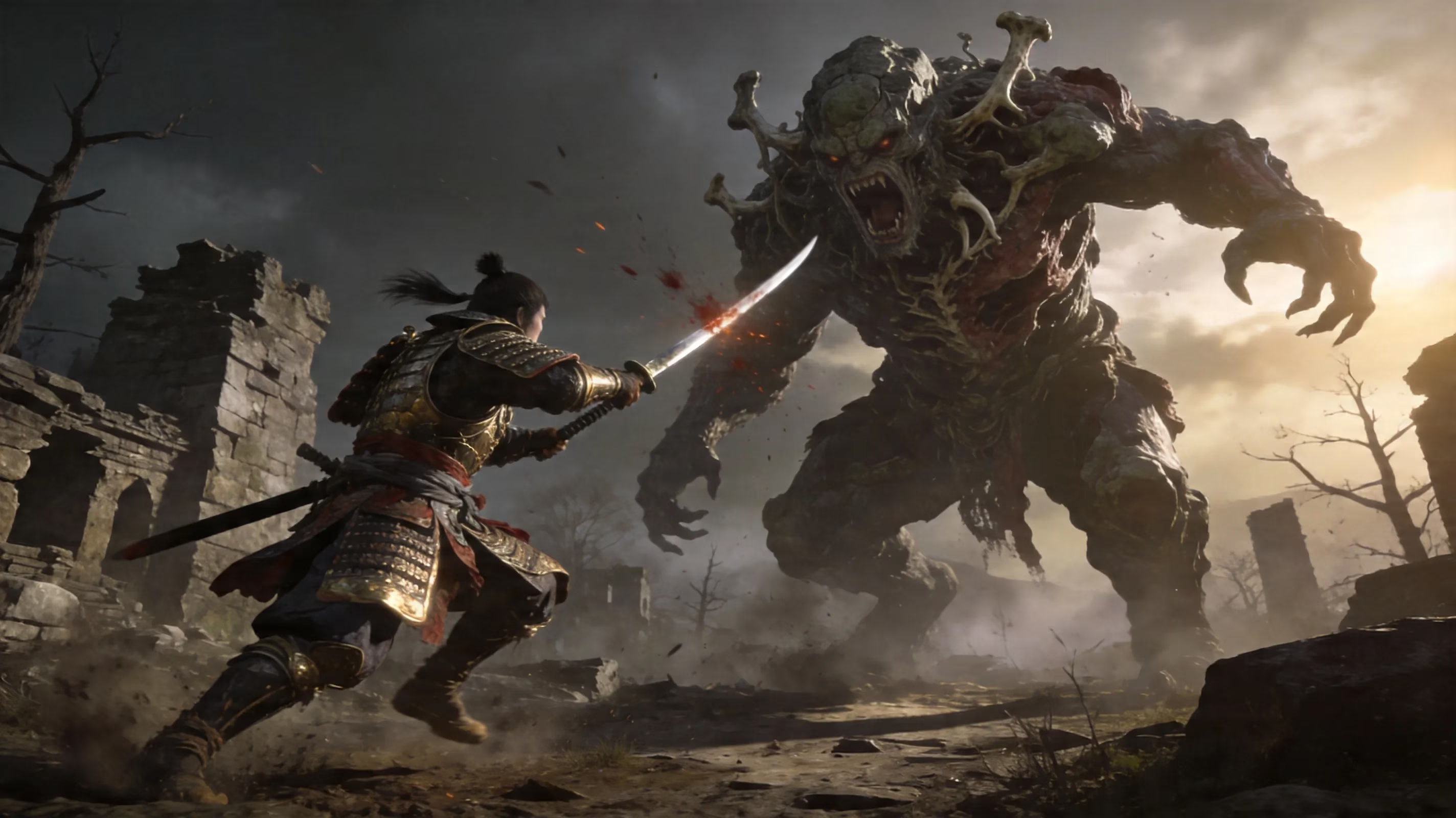
Pure Dex Build
A pure DEX build is all about Keen affinity and maximizing attack rating from Dexterity itself. A typical RL150 spread looks something like this: Vigor 55, Mind 18, Endurance 28, Strength 18, Dexterity 75, with any leftover points going into more Endurance or Mind depending on how often you use Ashes of War.
The playstyle revolves around roll-catch pressure. You’re punishing bad movement and delayed dodges with quick weapons that keep active hitboxes out long enough to clip recovery frames. Katanas are especially strong here because even if the poise damage per hit isn’t huge, the bleed buildup creates constant pressure. Opponents either keep eating chip and hit damage, or they eventually get tagged by a Hemorrhage proc.
When you need better stance damage, swapping to a heavier Dexterity weapon like Guardian’s Swordspear makes a lot of sense. It gives the build a way to fish for staggers and criticals against bosses that don’t care much about lighter poke pressure.
Dex Bleed Build
The DEX/Arcane bleed setup splits stats between Dexterity and Arcane, usually around 30 to 45 DEX and 45 to 60 ARC. Blood affinity shifts more of the scaling toward Arcane, while DEX still matters for meeting requirements and supporting fast multi-hit weapon choices.
The tradeoff here is pretty straightforward. Blood affinity usually gives you lower raw AR per hit than Keen, but the Hemorrhage proc more than makes up for it in many boss fights. Since bleed chunks roughly 10 to 15% of max HP when it triggers, high-health enemies can melt much faster than they would against a standard physical setup.
At the high end, dual-wielding bleed weapons with Corpse Piler from Rivers of Blood and an off-hand Occult Uchigatana is still one of the nastier versions of the archetype. The White Mask helmet is basically part of the package too, since it gives a 10% attack boost for 20 seconds whenever blood loss happens nearby. And because this build triggers bleed constantly, that buff has excellent uptime. The extra item discovery from Arcane is also a nice side bonus when you’re farming.
Dex Caster Hybrid
A DEX caster hybrid, whether DEX/INT or DEX/FTH, uses Dexterity to tighten spellcasting windows while still treating the weapon as the main source of pressure. It’s less about becoming a pure mage and more about making your melee game and spell game feed into each other.
For a DEX/INT Spellblade, a common RL150 target is around 45 to 55 DEX and 55 to 60 INT. Moonveil fits naturally here, but a Keen Cold-infused weapon can also work well depending on what moveset you prefer. Big sorceries like Comet Azur or Ranni’s Dark Moon then come in during boss phases where you have enough space to cash out.
A DEX/FTH version usually leans more into buff stacking before the fight starts. Flame, Grant Me Strength gives a 20% boost to physical and fire damage, while Golden Vow adds another 15% general attack increase. After that, you transition into weapon pressure. Bolt of Gransax works especially well in this setup because it scales from DEX while Faith incantations cover buffs, ranged pressure, and utility.
You do give up some peak damage compared to a fully specialized one-stat build. Still, the flexibility is real, and in DLC content where enemy resistances vary a lot, that versatility can be way more valuable than squeezing out the absolute highest AR number.
Dexterity FAQ Elden Ring
Does Dex increase damage in Elden Ring?
Yes. Dexterity directly raises the attack rating of weapons that scale with DEX, and the better the scaling grade, the more damage you get per point.
Does Dex increase swing speed?
No. This is still one of the most common misconceptions in the game. DEX does not make melee weapon animations faster. Its only direct speed-related combat benefit is faster casting for sorceries and incantations.
Is Dex better than Strength?
Not universally. They support different weapon types and different combat rhythms. Strength builds get heavier weapons, stronger stagger potential, and higher poise damage per hit. DEX builds trade that for faster-feeling weapon classes, better bleed synergy, stronger hybrid casting value, and more flexible Ash of War options. In the 2026 meta, DEX builds generally reward precision more and tend to have a higher skill ceiling.
Should you level Dex?
If your weapon has meaningful DEX scaling, then yes, absolutely. That includes katanas, curved swords, thrusting swords, claws, most bows, and anything on the Lightning path. For most of those builds, reaching at least 55 DEX is very worthwhile. It gets even better if you cast spells at all, since you also gain cast speed. The only time DEX stops being attractive is on a pure Strength build where your weapon barely scales from it and you’re only meeting minimum requirements.