I remember the frantic debates that erupted back in 2022, just weeks after Elden Ring hit our screens. I was there, scrolling through Twitter, when I saw Enzo’s tweet: “bloodborne still has the best lore of any fromsoft game.” It was a bold statement, especially with George R.R. Martin’s name attached to Elden Ring. Now, in 2026, after countless playthroughs of both games, I find myself agreeing more than ever.
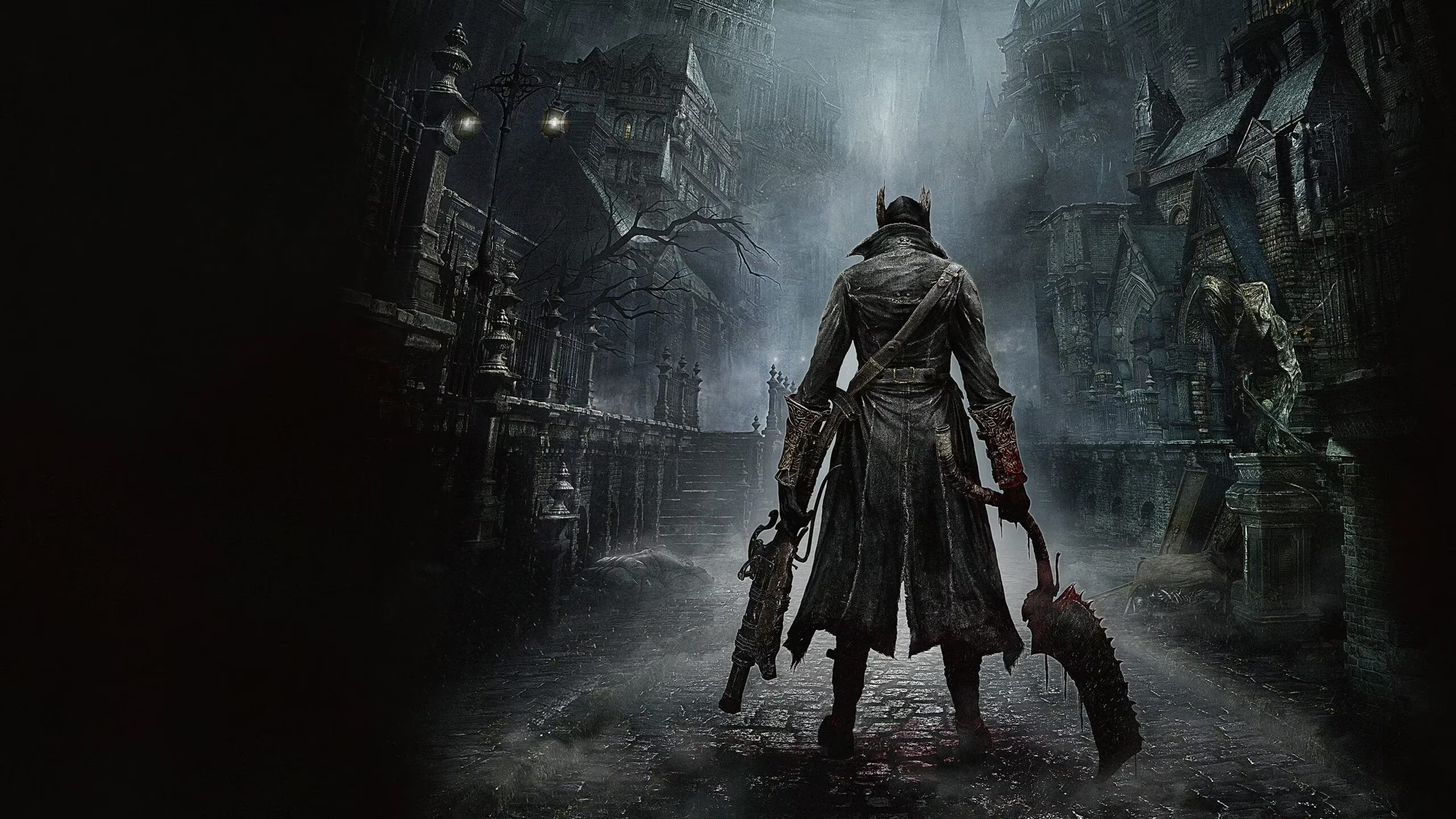
The world of Bloodborne is a labyrinth of cosmic horror and gothic tragedy. I still recall my first descent into Yharnam, the feeling that something far greater and more terrible than beasts lurked beneath the blood-soaked streets. The lore wasn’t handed to me; I had to claw it from item descriptions, cryptic NPC dialogue, and environmental clues. It was maddening, but oh so rewarding. I spent nights watching VaatiVidya’s videos, piecing together the Great Ones, the Healing Church’s sins, and the true nature of the Hunter’s Dream. That collaborative discovery made the story feel alive, as if we were all archeologists unearthing a forgotten civilization.
Elden Ring arrived with a different promise. George R.R. Martin had crafted the mythos of the Lands Between, the demigods, and the Shattering. FromSoftware then took that foundation and layered their signature ambiguity on top. The result was a more accessible epic. By simply following the main path and exhausting NPC quests, you could grasp the tale of Queen Marika, Radagon, and the tarnished. I appreciated that clarity—I didn’t need to spend hours on lore wikis to understand my purpose. Yet, this very accessibility became a double-edged sword for me and many veteran players.
The community quickly realized that Elden Ring’s narrative, while grand, lacked the hidden depths that made Bloodborne’s lore a masterpiece. In Bloodborne, the story constantly shifted: what began as a werewolf hunt transformed into a meditation on motherhood, ascension, and the fear of the unknown. The more you dug, the more unsettling the revelations became. Elden Ring, on the other hand, settles into a relatively stable mythological framework after you connect the dots. There are secrets, yes—the Formless Mother, the Outer Gods—but they never achieve the same mind-bending cohesion as the Great Ones.
By 2026, Elden Ring has received multiple expansions (Echoes of the Erdtree and the recently launched Lord of Nightmare), expanding the world with new demigod histories and alternate endings. These additions are fantastic, but they still follow a pattern of explicable divine politics. Bloodborne, even without a sequel, remains a singular achievement because it refuses to fully explain itself. It trusts the player to embrace confusion, to live in the mystery. That trust is what I miss in modern FromSoftware titles. The intrigue in Elden Ring is more about “what happens next” rather than “what is really happening.” Bloodborne made me question the very reality of the game world, and that philosophical unease is something no amount of Martin’s worldbuilding has matched.
I still return to Yharnam every October, a tradition among my friends. We discuss new theories about Oedon, the Chalice Dungeons, and the cut content. Meanwhile, my Lands Between explorations yield completionist maps and build optimization. Both are incredible games, but the lore of Bloodborne lives in a place beyond mere storytelling—it’s an experience that haunts your thoughts. So yes, in 2026, my heart still says: the night, and the dream, were long.