In the year 2026, as I look back upon the Lands Between, the echoes of our collective journey still shimmer in the cold light of distant constellations. Steam's data, a silent chronicle of our choices, whispers a truth more profound than any in-game lore: a staggering 25.9% of us became the consort to the stars, while only 19.6% chose to sit upon the crumbling throne as Elden Lord. This disparity is not a statistic; it is a testament, a collective sigh of longing for a future not written in gold, but etched in starlight. The so-called 'secret' ending, hidden behind a labyrinth of quests with no guiding thread, has become our most common destination. We did not merely complete a game; we embarked on a pilgrimage for a witch with one eye that saw beyond the broken world.
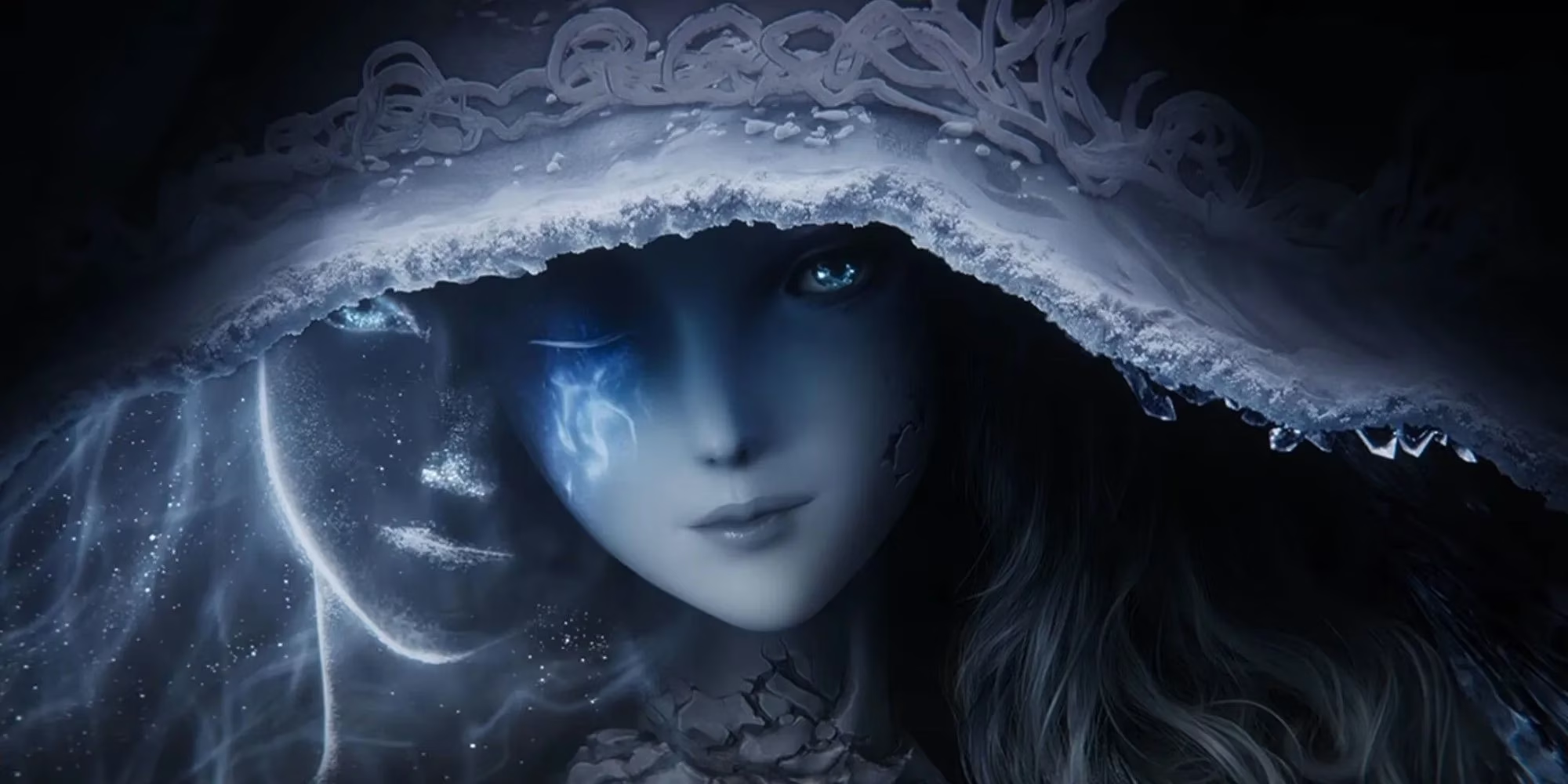
The path to the Age of Stars was never a checklist. It was a courtship with the unknown, a series of whispered secrets and forgotten places that felt less like a game objective and more like uncovering a forgotten dream. While the road to becoming Elden Lord was a straight, if brutal, march to the Erdtree, Ranni's quest was a delicate dance through shadows. It asked us to listen, to wander without a map, to find Blaidd the Half-Wolf howling at a moon we could not yet see. These locations—the rise of the Three Sisters, the depths of Nokron, the terror of the Lake of Rot—were like scattered pages from a forbidden grimoire, each one a puzzle piece to a picture of liberation. To miss them was to remain in the default narrative, a fate many of us actively sought to escape.
What called to us? It was not merely the mechanics, though their complexity is a badge of honor. It was the vision. In a world governed by rigid, decaying orders—the Golden Order, the Frenzied Flame, the hopeless stoicism of the Dung Eater—Ranni offered something fragile and new. Her ending is the only true romance in the entire, bleak tapestry, not of passion, but of partnership. We do not save her; we choose to walk with her into the vast, terrifying dark. As she takes the Elden Ring and our hand, she reshapes the world's hierarchy, placing it under the wisdom of the cosmos, as patient and silent as glacial ice. The discriminatory cycle of grace is broken, replaced by a freedom as vast and uncertain as the night sky itself.
Why the Stars Won Our Hearts
Let me break down the allure, not as data, but as feeling:
| Aspect | The Elden Lord Ending (Default) | The Age of Stars Ending (Ranni) |
|---|---|---|
| The Journey | A conquest. Defeat the gods, claim the throne. | A discovery. Follow the clues, earn the trust. |
| The Companion | You are largely alone, or served by sycophants. | You are guided by Ranni and Blaidd, forming genuine bonds. |
| The Future | Reforges the old order, with you at its head. Uncertainty remains. | Shatters the old order entirely, offering a clean, if unknown, slate under the stars. |
| The Emotional Payoff | Power, accomplishment, dominance. | Intimacy, hope, shared purpose. |
For many, myself included, this felt like the only 'good' ending. It wasn't about power; it was about responsibility. Ranni doesn't promise paradise. She promises an end to the cruel, golden stagnation. She gives the people of the Lands Between a chance to find their own meaning, free from the gilded cage of destiny, like seeds finally scattered to the wind instead of being planted in predetermined rows. This resonates deeply in our own era, making the choice feel profoundly personal, not just strategic.
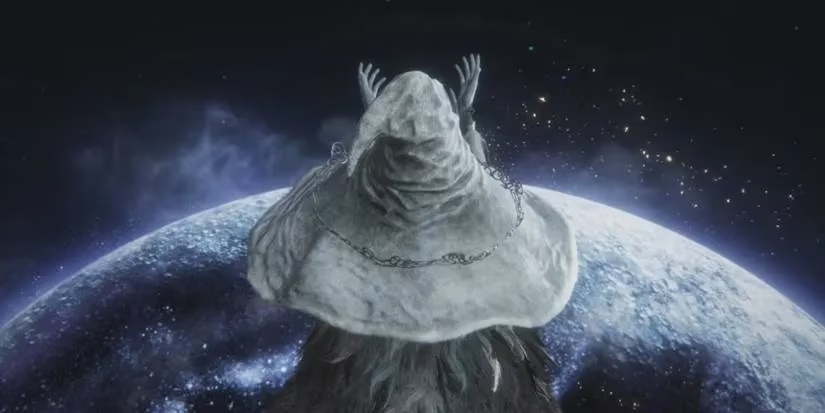
The numbers are staggering for a Soulsborne title, where completion rates often languish. That so many of us undertook this arduous, untracked quest speaks volumes. We weren't just beating bosses; we were committing to an ideal. Ranni herself, that haunting figure from the fairy tales, became our symbol. A one-eyed witch teaching the cold, beautiful logic of the night—she was a refuge from the fire and madness everywhere else. Choosing her was choosing mystery over certainty, potential over preservation.
So, as I stand here in 2026, the community's preference is clear. We did not want to be lords of a dying world. We wanted to be consorts to a new dawn, however dim its first light. We chose the longer, hidden path because it led away from the throne and towards the stars. And in that silent, starlit ending, we found not just a conclusion to a game, but a reflection of our own desire to break cycles and seek a gentler, if colder, freedom. The Age of Stars is more than an achievement; it is our collective signature on a contract with the unknown.